
Growth in the managed services industry is rarely limited by technical capability. Most providers already deliver dependable support, strong cybersecurity protection, and stable infrastructure management. The real challenge is consistently turning attention into qualified conversations and long-term contracts. That is where a structured marketing funnel becomes essential, and many providers eventually realize they need guidance from a specialized managed services marketing agency to create predictable, scalable growth.
A marketing funnel is more than a visual model or a collection of software tools. It represents the complete journey a potential client follows, beginning with the moment they first become aware of your services and ending when they confidently sign a managed services agreement. MSPs that build intentional funnels create predictable lead flow, shorter sales cycles, and more stable revenue. Those without a defined funnel often rely on referrals and inconsistent outreach, which makes growth difficult to control. Understanding how to design a funnel that truly converts can transform the way an MSP attracts and wins new business.
Why Many MSPs Struggle Without a Defined Funnel
Many managed service providers invest in websites, search visibility, advertising, or content creation but still feel uncertain about results. The missing element is usually connection between each stage of the buyer journey. Traffic may arrive, yet visitors do not clearly understand the value being offered. Leads may appear, yet they are unqualified or slow to respond. Sales conversations may begin, yet trust is not strong enough to close consistently.
Without a defined funnel, marketing activities operate in isolation. Individual tactics might produce partial success, but nothing guides prospects smoothly from curiosity to commitment. A high-converting funnel removes this friction by creating clarity, confidence, and direction at every stage.
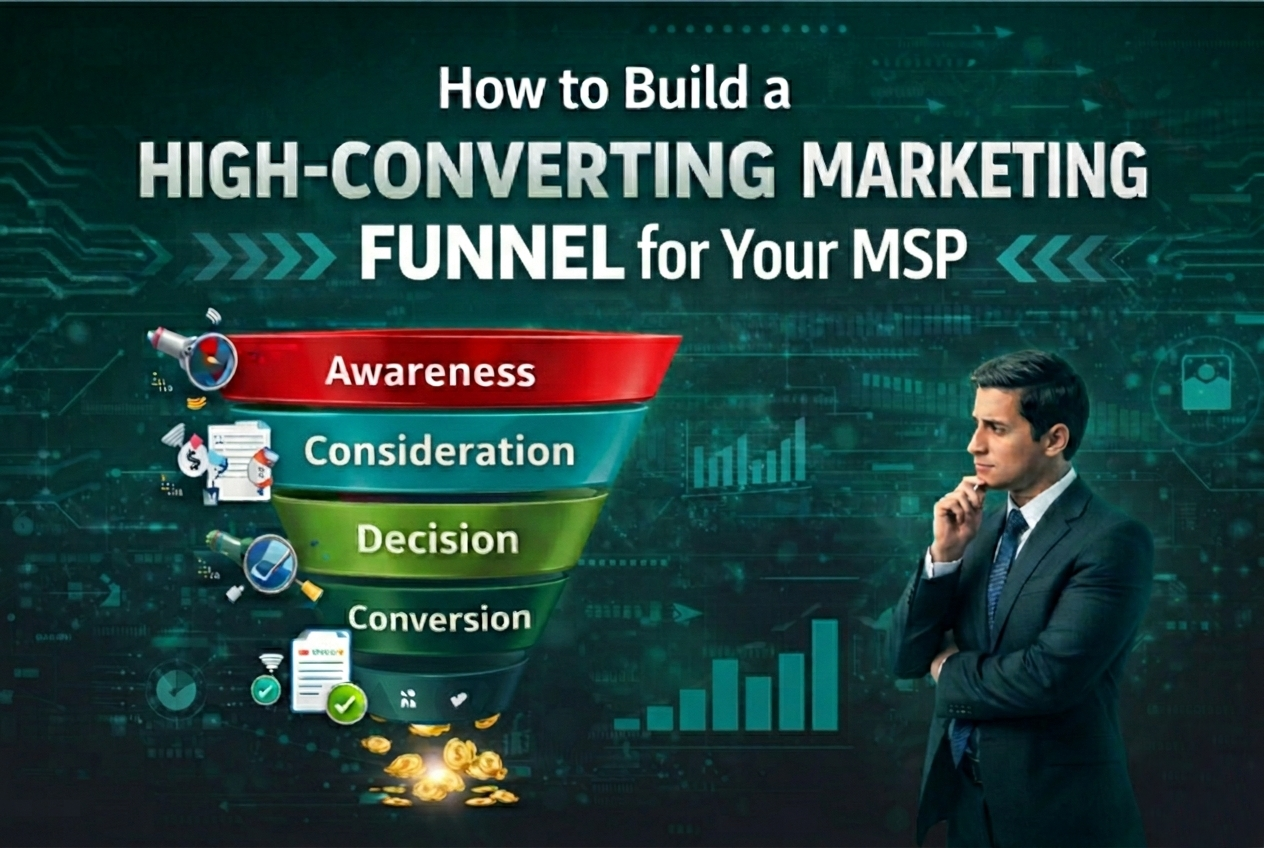
The Four Core Stages of a High-Converting MSP Funnel
Every effective funnel follows a natural psychological progression. Prospects must first notice your presence, then trust your expertise, then believe your solution fits their needs, and finally feel confident enough to take action.
The first stage is awareness. At this point, businesses may not know your company exists or may only be beginning to recognize technology risks. Search visibility, educational content, and targeted outreach introduce your MSP as a credible resource.
The second stage is consideration. Prospects actively compare providers, evaluate experience, and look for reassurance. Case studies, reviews, and clear service explanations become essential in building confidence.
The third stage is decision. Prospects are ready to speak with someone but still want proof that choosing your MSP is the correct move. Assessments, consultations, and transparent onboarding steps help remove hesitation.
The final stage is conversion. A clear proposal, fast follow-up, and strong relationship building turn opportunity into a signed long-term client.
When each stage is intentionally designed, the funnel becomes a continuous growth system instead of a collection of disconnected marketing efforts.
Step One: Attract the Right Traffic Instead of Chasing Volume
High-converting funnels begin with relevance. Bringing the wrong visitors to your website creates the illusion of activity without producing meaningful opportunities. MSP marketing should focus on organizations already experiencing downtime frustration, cybersecurity concerns, compliance pressure, or operational growth that requires professional IT support.
Search engine visibility plays a central role because it captures real intent. When a company searches for managed IT support, cybersecurity protection, or technology compliance guidance, it is already moving toward a buying decision. Educational content expands this reach by answering early-stage questions and positioning your MSP as a trusted advisor before direct contact ever occurs. Targeted advertising and professional networking can strengthen awareness further, but the guiding principle remains consistent. Quality of attention always matters more than raw traffic numbers.
Step Two: Build Immediate Trust the Moment Visitors Arrive
Once a potential client reaches your website, the next few seconds determine whether they stay or leave. High-converting funnels remove confusion and communicate value instantly. Clear messaging should explain who you help, what problems you solve, and what business outcomes clients experience. Rather than listing only technical services, strong positioning highlights reduced downtime, stronger security posture, and dependable support that protects productivity. Trust signals reinforce credibility. Verified reviews, recognizable certifications, and concise case study outcomes demonstrate real-world success. When visitors see proof quickly, hesitation decreases and engagement increases. This stage is often underestimated, yet small improvements in clarity and credibility can dramatically increase conversion rates without increasing traffic.
Step Three: Offer a Low-Risk First Step That Encourages Engagement
Many MSP websites ask visitors to request a quote or make contact immediately. For prospects still evaluating options, this can feel premature. High-converting funnels introduce a lower-commitment step that provides value before any sales discussion begins. Security posture reviews, technology risk assessments, or short discovery calls perform well because they focus on insight rather than pressure. These offers reposition the MSP from vendor to advisor and create a natural reason for prospects to engage. The objective is simple. Replace hesitation with curiosity, and replace curiosity with meaningful conversation.
Step Four: Respond Quickly and Guide the First Conversation
Speed strongly influences conversion in managed services. When inquiries wait too long for a reply, interest fades or competitors step in. A high-converting funnel includes immediate confirmation, clear scheduling options, and consistent follow-up communication. During the first conversation, the focus should remain on business impact rather than technical complexity. Understanding operational challenges, security risks, and growth goals builds trust while positioning your MSP as a strategic partner rather than reactive support. Clear next steps at the end of every interaction keep momentum moving forward. Prospects should always understand what will happen next and when.
Step Five: Present a Proposal That Feels Certain Instead of Risky
Even highly interested prospects may hesitate at the proposal stage if uncertainty remains. High-converting funnels reduce perceived risk through transparency and reassurance. Clear service structure, defined onboarding timelines, and straightforward pricing logic help decision makers feel confident. Including measurable success stories from similar clients strengthens credibility even further. When proposals answer concerns before they are spoken, closing becomes a natural progression rather than a difficult negotiation.
Step Six: Continue Nurturing After the First Conversion
A true marketing funnel does not end with a signed agreement. Long-term MSP growth depends on retention, referrals, and expanded relationships. Consistent communication, educational updates, and proactive support reinforce trust and encourage satisfied clients to recommend your services. This ongoing engagement effectively feeds the top of the funnel again, creating a self-sustaining cycle of new opportunities built on proven results.
Measuring Funnel Performance the Right Way
A high-converting funnel is guided by data rather than assumptions. Tracking how many visitors become leads, how many leads schedule conversations, and how many conversations become clients reveals exactly where improvement is needed.
Cost per lead, conversion rate, and client lifetime value provide deeper insight into marketing effectiveness. When these numbers are visible, decision making becomes clearer and investment becomes more confident.
For MSPs that want to better understand how search visibility, user behavior, and conversions connect inside a funnel, Google provides detailed guidance in its official
SEO starter guide, which explains the fundamentals behind sustainable organic traffic and measurable growth. Aligning your funnel strategy with these principles supports long-term performance rather than short-term spikes. Measurement ultimately turns marketing from uncertainty into strategy.
Turning Your Funnel Into a Predictable Growth Engine
The true power of a marketing funnel is consistency. Instead of hoping for referrals or occasional inquiries, MSPs with structured funnels generate steady opportunities month after month. Awareness leads to trust, trust leads to conversation, and conversation leads to long-term partnership.
This predictability allows business owners to plan hiring, expand services, and invest in future growth with confidence. Marketing shifts from reactive effort into a reliable business system.
Take the Next Step Toward Higher-Converting MSP Growth
Building a high-converting funnel does not require complexity, but it does require intention. Clear positioning, strong trust signals, valuable first steps, rapid response, and consistent measurement work together to create meaningful results.
For managed service providers ready to move beyond inconsistent lead flow, refining the marketing funnel is often the single most impactful improvement they can make. With the right structure in place, growth becomes repeatable instead of uncertain.If you want to see exactly where prospects are dropping off and how to turn more visitors into long-term managed service clients, the most valuable next step is a focused funnel review. Schedule your MSP marketing strategy call today and receive a clear action plan to increase qualified leads, improve conversions, and build predictable recurring revenue for your managed services business.
FAQs
What is a marketing funnel for an MSP?
A marketing funnel for an MSP is the step-by-step journey that turns website visitors into qualified leads and long-term managed IT clients through trust, education, and clear next actions.
Why do MSPs need a high-converting marketing funnel?
Without a structured funnel, leads are inconsistent and difficult to close. A strong funnel creates predictable growth, better conversion rates, and measurable results from MSP marketing efforts.
How long does it take to see results from an MSP marketing funnel?
Early improvements in lead quality and response rates can appear within a few months, while full performance from optimized MSP growth strategies typically develops over four to nine months.
What is the most important stage of an MSP funnel?
Trust building is often the most critical stage. Reviews, case studies, and clear value messaging strongly influence whether prospects schedule a conversation.