
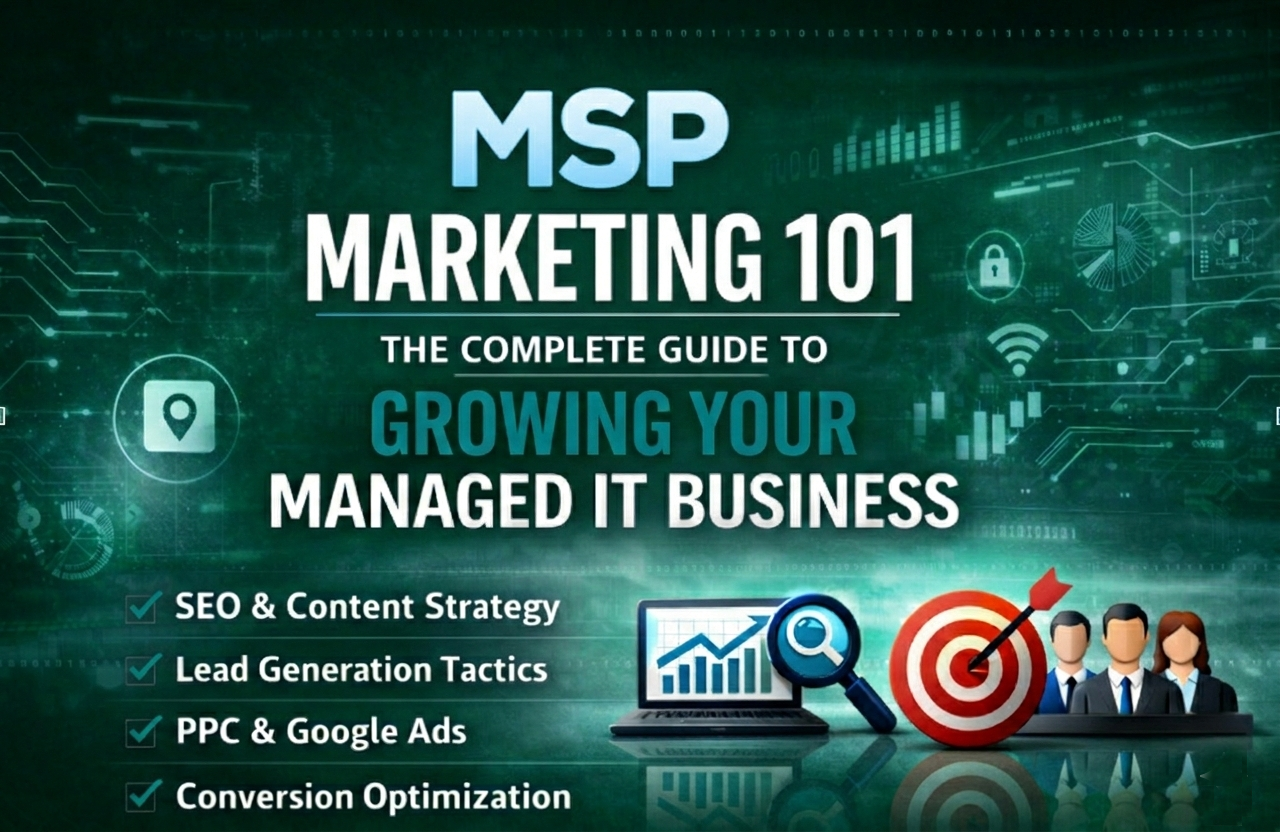
Sustainable growth in the managed services industry rarely happens by chance. Most providers begin their journey relying heavily on referrals and long-standing relationships, which can work for a time. Eventually, competition increases, client expectations evolve, and predictable lead generation becomes essential. At that moment, MSP marketing shifts from an optional activity to a core business function.
What makes marketing in this space unique is the nature of the service itself. Managed IT is built on trust, long-term reliability, and measurable business outcomes. Companies are not simply purchasing technical support. They are investing in operational stability, security, and confidence that their systems will continue running without disruption. Because of this, traditional digital tactics alone are not enough. Effective marketing for managed service providers requires strategic positioning, authority, and a clear path from first visit to signed agreement. This guide explains how modern MSPs create consistent visibility, generate qualified leads, and convert interest into long-term clients.
Understanding the Real Purpose of MSP Marketing
At its core, MSP marketing is the structured process of attracting the right organizations, demonstrating credibility before the first conversation, and guiding prospects toward a trusted partnership. Many providers attempt scattered tactics such as occasional ads, infrequent blog posts, or website redesigns. When results fail to appear, marketing itself is often blamed. In reality, the challenge is usually a lack of clarity and connection between each stage of the buyer journey.
When messaging is vague, prospects cannot quickly understand who the service is designed for. When websites lack proof or compelling calls to action, visitors leave without engaging. When follow-up is delayed, qualified opportunities choose the competitor who responded first. Strong MSP growth strategies align positioning, traffic, and conversion into one predictable system.
Positioning Before Promotion
Before investing in SEO, advertising, or lead generation, a managed service provider must clearly define its audience and outcomes. Clear positioning strengthens every marketing channel that follows. A strong positioning statement communicates who you serve, the problem you solve, the result clients experience, and the reason they should trust you. Instead of saying you provide IT support, a more powerful message might explain how you help professional service firms reduce downtime, strengthen cybersecurity, and gain fast, proactive technology support. Focused positioning does not limit opportunity. It increases relevance, which improves search rankings, advertising performance, and referral quality. This clarity forms the foundation of effective marketing for managed service providers.
Creating a Predictable Lead Generation Funnel
Reliable growth requires more than occasional inquiries. High-performing providers build simple, intentional funnels that guide prospects from awareness to scheduled conversations. Visibility often begins with organic search, targeted advertising, professional networking platforms, and strategic partnerships. Each channel supports the others rather than operating independently. Once attention is captured, meaningful offers such as security assessments or discovery calls encourage engagement by providing immediate value. Conversion then depends on speed, credibility, and clarity. Quick responses, visible proof, and a clearly defined next step dramatically increase the likelihood that a prospect becomes a client. These elements are central to scalable MSP growth strategies.
Website Experience That Turns Visitors Into Clients
Many managed service websites appear modern yet fail to generate real inquiries because they prioritize design over persuasion. A high-converting site communicates relevance immediately, reinforces trust throughout the experience, and guides visitors toward one clear action. The homepage should clearly explain who the service is for and what business outcome it delivers. Reviews, certifications, and partner relationships reassure visitors that the provider is established and reliable. Straightforward explanations of services, industries served, and onboarding steps reduce uncertainty that might otherwise delay a decision. Clear invitations to schedule a short consultation or request a security review consistently outperform generic contact forms. When placed naturally throughout the page, these calls to action transform passive browsing into meaningful engagement.
How SEO Builds Long-Term MSP Visibility
Search engine optimization remains one of the most dependable growth channels because it reaches businesses already searching for help. Effective SEO for MSPs focuses on buyer intent rather than broad traffic numbers.
Service pages must clearly explain managed IT, cybersecurity, cloud environments, and support outcomes in language business owners understand. Local credibility signals help search engines associate the provider with nearby organizations while maintaining natural readability. Consistent reviews and accurate listings strengthen this trust further. Authority grows through educational content that answers real purchasing questions such as pricing expectations, onboarding timelines, and security risks. Over time, this network of helpful information strengthens rankings and positions the provider as a knowledgeable advisor rather than simply another vendor. Many leading firms partner with an experienced IT marketing agency to accelerate this process and ensure technical SEO, content strategy, and conversion optimization work together effectively. For reference, Google outlines foundational SEO best practices in its official Search Central documentation.
Using Paid Advertising Strategically
Paid search can produce qualified opportunities quickly when executed with precision. Campaigns succeed when they focus on high-intent searches from businesses actively seeking outsourced IT or cybersecurity support. Problems arise when targeting becomes too broad or when traffic is directed to pages that lack clear conversion paths.
Well-structured campaigns align keyword intent, landing page messaging, and accurate tracking of calls or form submissions. When managed correctly, advertising complements organic visibility and becomes an important component of broader MSP growth strategies.
Building Consistent Lead Flow Beyond One Channel
Dependence on a single acquisition source creates instability. Sustainable providers combine inbound visibility with thoughtful outbound outreach and strategic partnerships.
Inbound channels capture demand that already exists. Outbound communication, when personalized and relevant, introduces services to organizations that may not yet recognize their technology risks. Partnerships with accountants, compliance specialists, and technology vendors frequently become powerful referral engines because they serve the same client base. This balanced approach transforms marketing from unpredictable activity into dependable momentum.
Trust Signals That Accelerate Decisions
In managed services, credibility strongly influences whether a prospect schedules a conversation. Case studies, verified reviews, and measurable before-and-after improvements reduce perceived risk. Transparent onboarding processes and response expectations further strengthen confidence. Offers that provide insight without pressure, such as security posture reviews or technology risk summaries, encourage engagement because they feel consultative rather than promotional. These subtle trust builders often determine which provider earns the opportunity to present a proposal.
Content That Generates Clients, Not Just Traffic
The most effective MSP content addresses real buying concerns. Articles explaining service costs, comparing support models, or outlining cybersecurity risks align directly with the decision-making process of business owners. Strategic calls to action placed naturally within valuable insights guide readers toward meaningful next steps without disrupting the experience.
Over time, consistent educational publishing becomes a powerful engine for authority, visibility, and qualified lead generation. Many organizations accelerate this impact by collaborating with a specialized IT marketing agency that understands the nuances of MSP marketing and long-term search growth.
A Practical Path Forward
True growth in managed services does not come from isolated tactics. It results from the alignment of positioning, visibility, trust, and conversion. When these elements work together, marketing evolves from uncertain expense into measurable investment.
For providers ready to strengthen pipeline consistency, the next step is a focused evaluation of current performance, missed opportunities, and fastest paths to improvement. Even a short strategic review can reveal meaningful gains in lead quality and conversion efficiency. If your objective is predictable client acquisition, stronger authority, and measurable return from marketing for managed service providers, now is the ideal time to act. Schedule a brief MSP growth consultation or request a detailed website and funnel audit to discover where new opportunities are being created or lost.
FAQs
What is MSP marketing?
MSP marketing is the process of attracting, educating, and converting businesses into long-term managed IT clients using SEO, content, advertising, and trust-building strategies.
Why is marketing important for managed service providers?
Effective marketing for managed service providers creates predictable lead flow, strengthens authority, and reduces dependence on referrals alone.
How long does MSP marketing take to work?
Most providers see early traction in 60 to 90 days, while consistent results from strong MSP growth strategies typically build within four to nine months.
Which channel works best for MSP lead generation?
The strongest results come from combining SEO, Google Ads, and outbound outreach instead of relying on a single tactic within MSP marketing.