

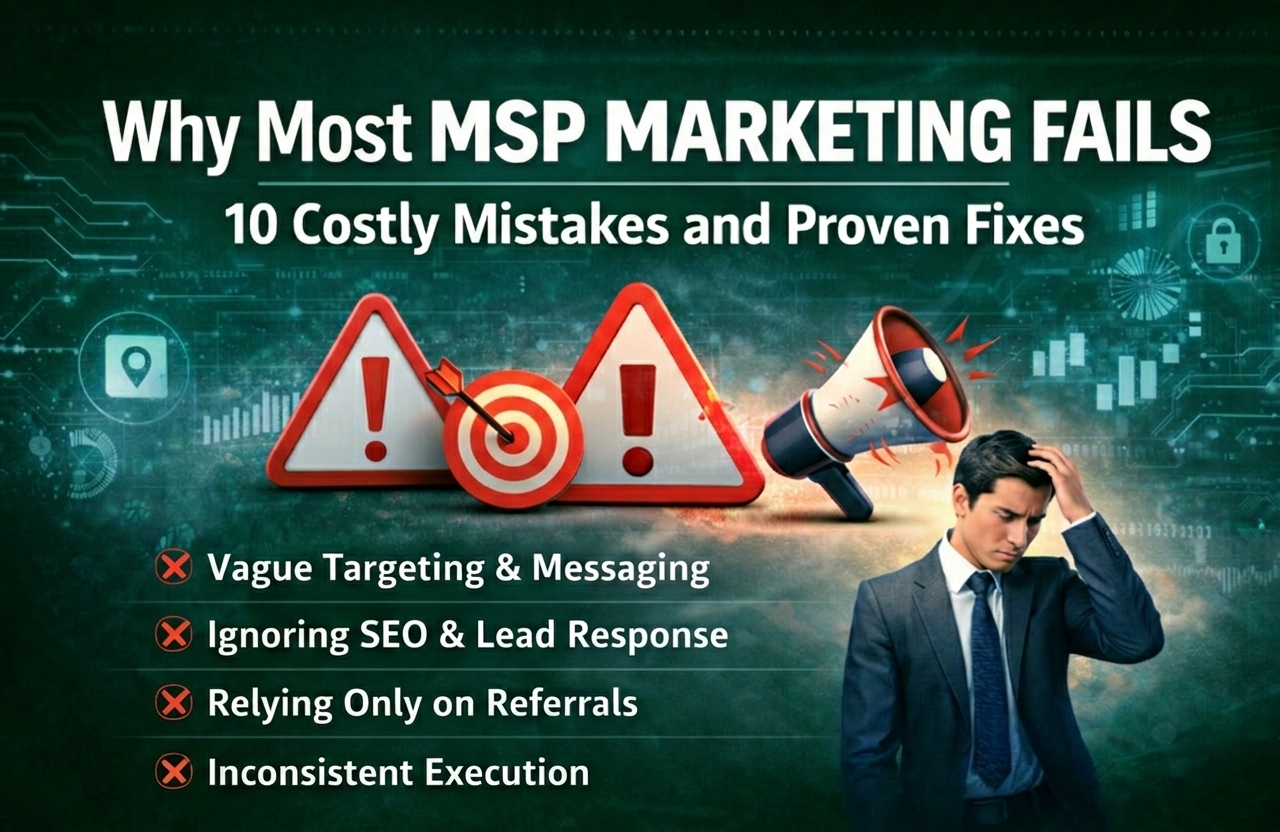
Many managed service providers reach a frustrating stage where referrals slow down, competition becomes more aggressive, and new client acquisition feels unpredictable. At that moment, business owners begin investing in MSP marketing with the hope of creating steady growth, yet the results often fall short of expectations. This is especially common in competitive technology markets such as Denver, where buyers have many options and quickly compare credibility, responsiveness, and expertise before choosing a provider.
The problem is rarely a lack of effort. Most MSPs are doing something related to marketing. They run occasional ads, publish a few blog posts, or redesign their website. What is usually missing is strategy, positioning, and consistent execution. Understanding the most common mistakes can prevent wasted budget and accelerate meaningful growth. This guide explains the ten most costly marketing errors MSPs make and how to fix them using practical, proven approaches.
Mistake 1: Trying to Serve Everyone
One of the biggest reasons marketing fails is vague targeting. When messaging attempts to appeal to every business type, it becomes relevant to none of them. Prospects scanning a website or advertisement must quickly recognize that the service is designed for companies like theirs.
The fix:
Define a clear ideal client profile based on industry, company size, compliance needs, or technology complexity. Focused positioning improves SEO relevance, ad performance, and referral quality while making sales conversations easier.
Mistake 2: Weak or Confusing Website Messaging
Many MSP websites describe services but fail to communicate outcomes. Visitors should immediately understand what problems are solved, what results to expect, and why the provider is trustworthy.
The fix:
Rewrite homepage messaging to emphasize business impact rather than technical features. Include proof elements such as reviews, certifications, response guarantees, and short case study summaries. Every page should guide visitors toward a clear next step such as scheduling a consultation or requesting a security assessment.
Mistake 3: Relying Only on Referrals
Referrals are valuable, but they are unpredictable and difficult to scale. MSPs that depend entirely on word of mouth often experience inconsistent revenue cycles.
The fix:
Build multiple acquisition channels. Combine search visibility, targeted advertising, strategic partnerships, and consistent content publishing. A diversified lead system creates stability and reduces pressure on any single source.
Mistake 4: Treating SEO Like a One-Time Project
Search optimization is frequently misunderstood. Some providers expect immediate rankings after launching a new website or publishing a few articles, and when fast results do not appear, the effort is abandoned. In reality, sustainable visibility comes from consistent authority building, helpful content, and strong technical structure developed over time.
A useful reference for understanding how search engines evaluate websites is Google’s official SEO starter guide for website owner which explains the core principles behind crawling, indexing, and ranking. Aligning your long-term strategy with these fundamentals ensures that MSP marketing efforts produce measurable growth rather than short-lived traffic spikes.
The fix:
Approach SEO as a long-term authority strategy. Publish educational content that answers real buyer questions, strengthen local credibility signals, and continuously improve service pages. Consistency over several months produces compounding visibility that advertising alone cannot match.
Mistake 5: Running Ads Without Conversion Strategy
Paid advertising can generate fast traffic, yet many MSPs lose money because campaigns send visitors to generic pages that do not convert. Without clear tracking, it becomes impossible to measure performance.
The fix:
Align keywords, landing page messaging, and a single strong call to action. Track calls, form submissions, and booked meetings so budget decisions are based on real data rather than assumptions.
Mistake 6: Ignoring Trust Signals
Managed services involve long-term responsibility, which means buyers look for reassurance before making contact. Websites without reviews, testimonials, or real results create hesitation even if the provider is highly skilled.
The fix:
Actively collect client feedback and publish measurable outcomes. Short case studies explaining reduced downtime, improved security, or faster support response dramatically increase credibility and shorten the sales cycle.
Mistake 7: Publishing Content Without Strategy
Random blog topics rarely generate qualified leads. Content must align with the real concerns business owners research before choosing an IT partner.
The fix:
Create structured topic clusters around cybersecurity risk, service pricing, onboarding expectations, and compliance readiness. Educational authority positions the MSP as a trusted advisor rather than just another vendor competing on price.
Mistake 8: Slow Lead Response Time
Speed strongly influences conversion. When inquiries wait hours or days for a reply, prospects often choose the competitor who responds first.
The fix:
Implement immediate notifications, fast scheduling links, and simple qualification processes. Even small improvements in response time can significantly increase closed deals without increasing traffic.
Mistake 9: No Clear Marketing Metrics
Without defined metrics, marketing becomes guesswork. Many MSPs cannot confidently answer how leads are generated, what each lead costs, or which channel produces the highest value clients.
The fix:
Track core performance indicators such as cost per lead, booked meeting rate, proposal conversion rate, and client lifetime value. Data driven decisions transform marketing from uncertain expense into measurable investment.
Mistake 10: Inconsistent Execution
The most common failure is inconsistency. Providers test tactics briefly, stop too soon, and move on to something new before results can develop. Sustainable growth requires patience and disciplined execution.
The fix:
Commit to a focused strategy for at least ninety days. Maintain steady content publishing, review collection, outreach activity, and campaign optimization. Consistency almost always outperforms complexity.
Turning Mistakes Into Predictable Growth
Avoiding these ten mistakes does more than improve visibility. It transforms marketing into a reliable engine for client acquisition. Clear positioning attracts the right audience. Strong messaging builds trust. Consistent execution creates momentum that compounds over time. For managed service providers ready to move beyond uncertainty, the next step is not more random tactics but a structured evaluation of current performance and missed opportunities. Even small strategic adjustments can unlock meaningful improvements in lead quality and conversion rates.
If your goal is steady client acquisition and long-term authority through effective MSP marketing in competitive regions like Denver, the most valuable action you can take today is a focused review of your website, lead funnel, and growth strategy.
FAQs
Why does MSP marketing fail for many providers?
Most failures happen because strategy is unclear, targeting is too broad, and execution is inconsistent. Effective MSP marketing requires clear positioning, trust signals, and steady lead generation rather than occasional tactics.
What is the biggest marketing mistake MSPs make?
The most common mistake is trying to serve every type of business. Strong marketing for managed service providers begins with a defined audience and clear business outcome.
How long does it take to fix poor MSP marketing results?
Early improvements can appear within a few months after messaging, SEO, and lead response are optimized. Sustainable MSP growth strategies typically build stronger momentum over four to nine months.
Can SEO alone grow a managed service provider?
SEO is powerful but works best when combined with advertising, partnerships, and conversion optimization. Balanced MSP marketing creates more predictable lead flow than relying on one channel.