Diagnose an observation before choosing the work
An absent brand mention is a starting observation, not a diagnosis. Read the question, the generated answer and any cited sources. Determine whether the answer is discussing the type of service and buyer situation the business actually serves. Then inspect the page you would expect a buyer to find. Does it explain the offer clearly? Does it substantiate important claims? Can the intended reader reach a suitable next step? Adding more words does little when the missing information is a specific capability, limitation or process detail.
Match the gap to an intervention
| Observed gap | Useful investigation | Possible website action |
|---|---|---|
| The business is described vaguely | Review service facts and company identity | Clarify what is offered and for whom |
| Another source answers a specific question better | Compare evidence and explanation | Add a genuinely useful worked answer |
| A cited page is outdated | Verify the current facts | Correct the page and its supporting references |
| A useful page is hard to find | Review access and internal links | Repair the navigation or collection of relevant links |
| Results vary across checks | Inspect consistent scope and completion | Improve the measurement record before claiming a trend |
These are investigative patterns, not a formula that guarantees a citation. Some answer changes occur without a corresponding website change.
Work through the demo question set
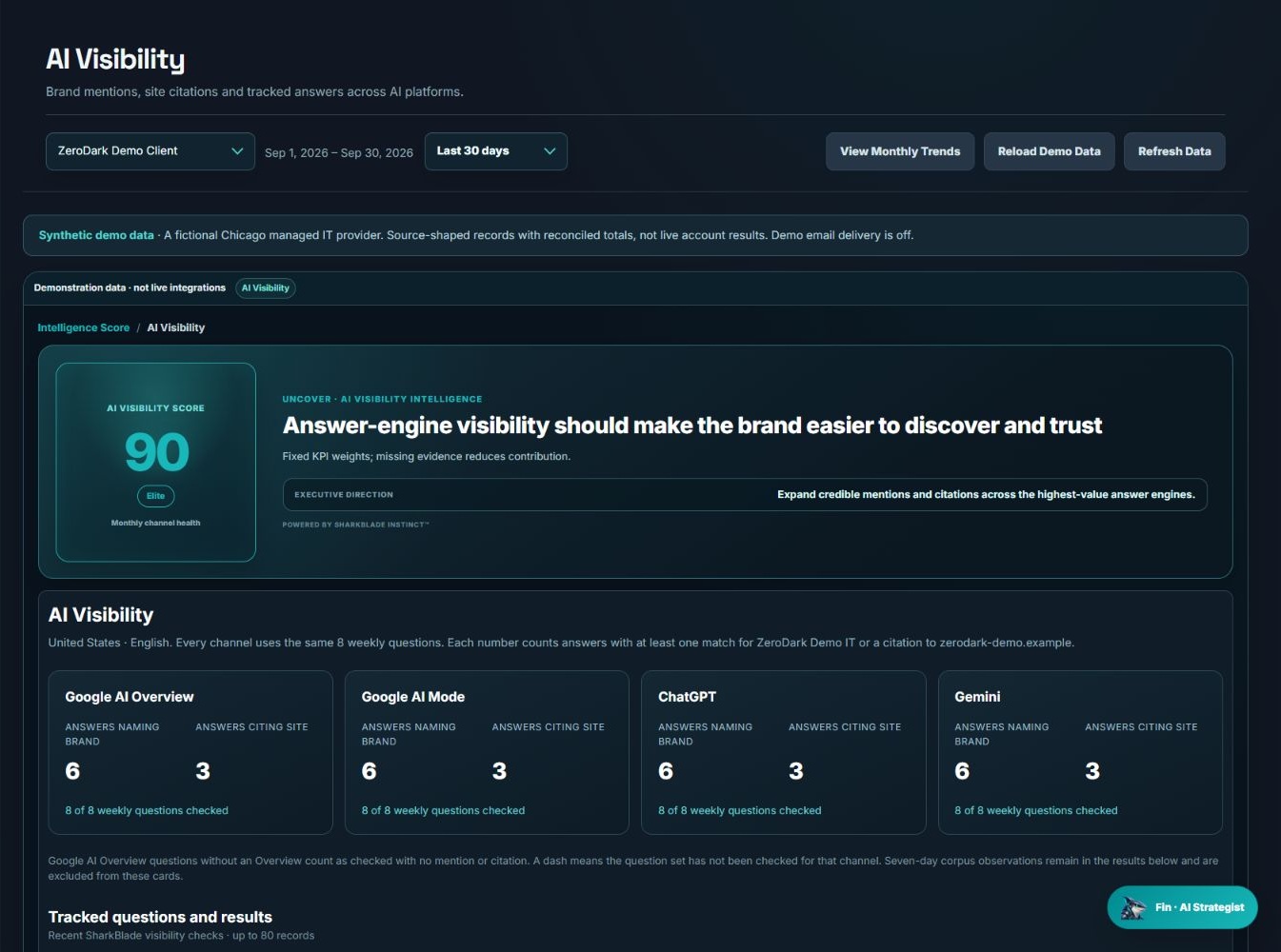
The demo shows separate mention and site-citation counts for the same eight-question scope across four experiences. A reviewer can ask whether a page cited for one question is also relevant to another. The data is synthetic and does not establish a real competitive gap. For a hypothetical provider, a buyer may ask about support for a regulated technical environment. If the website only says “we help every business,” the useful improvement is a precise, substantiated explanation of the actual supported work. Inventing credentials or client experience would make the answer less trustworthy.
Define the content change precisely
Write down the question, the target page, the missing explanation and the evidence needed to support it. Assign an owner and an acceptance check. For example: “Add a clear description of the onboarding process and the responsibilities required from the client, then verify it with the delivery team’s documented process.” Keep a record of the change date. Recheck a stable question set and review relevant search and inquiry evidence. If new questions are added, analyze them separately until there is a comparable basis.
Preserve what remains uncertain
Foundational search accessibility and useful original content are supported practices in Google’s guidance. They do not prove that a particular intervention caused a later AI mention. Avoid reporting a single new citation as a durable placement or a sales outcome. Use the AI measurement guide to define the observations and the audit guide to distinguish page readiness from actual answer evidence. That makes the work inspectable even when results take time or vary.