Define what you are observing
AI search visibility is an observation of whether a business appears in answers or cited sources for a documented set of questions. It is not a universal ranking that stays identical across every user, location and time. Begin with buyer questions, the business or brand being checked, the website domain, market and language. Then record the platforms and the observation schedule. A result is interpretable only when that scope is known.
The demo shows a useful distinction
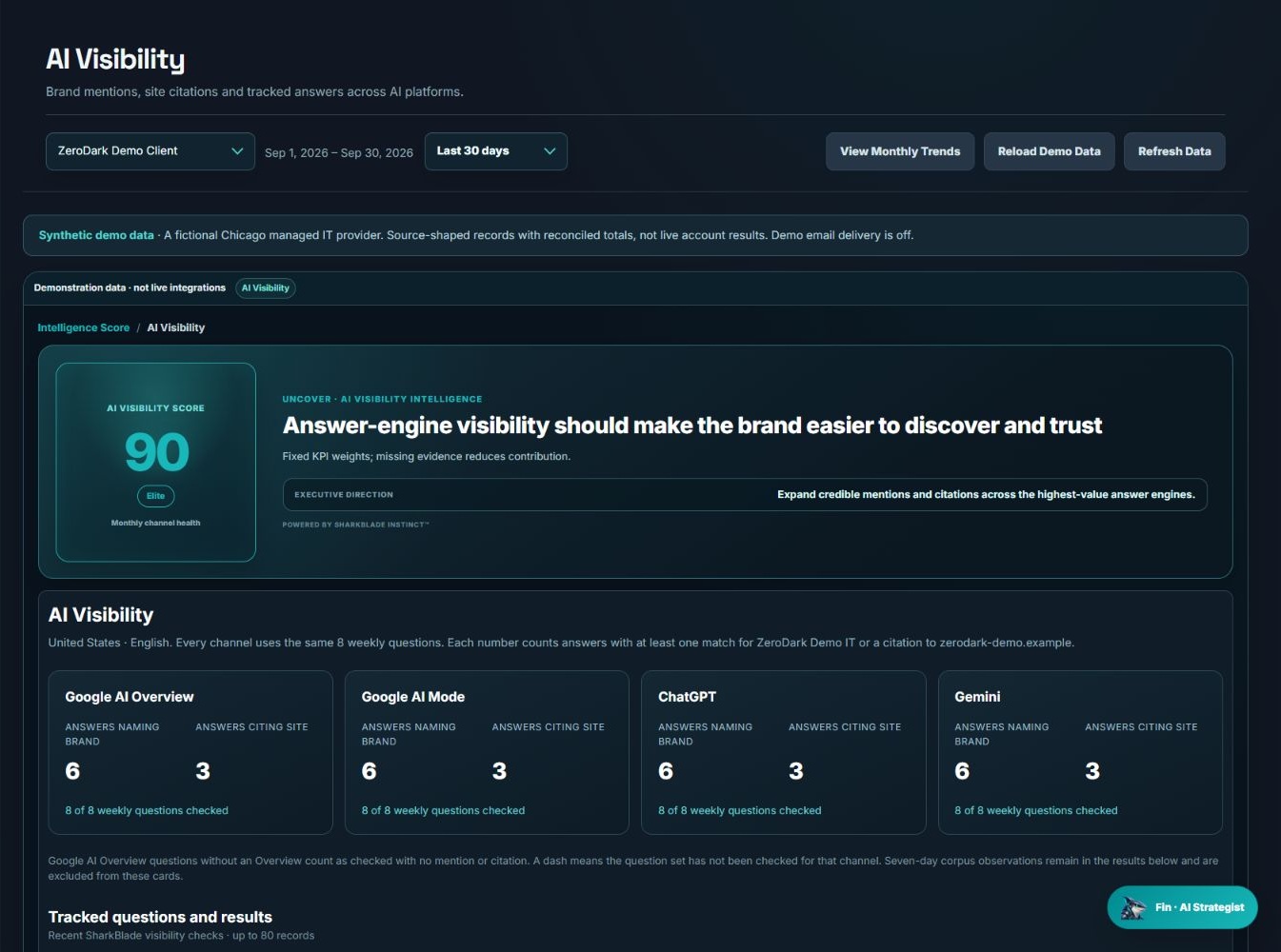
For each displayed platform, the synthetic demo shows six answers naming the brand and three citing the site out of eight checked questions. Within that specific sample, six divided by eight is 75% and three divided by eight is 37.5%. The category score displayed above is 90. It is an assessment, not another label for either raw sample percentage. Quoting the score as “90% of all AI answers mention us” would be incorrect.
Preserve the observation record
| Field | Why it matters |
|---|---|
| Question | Identifies the buyer need being tested |
| Platform and experience | Distinguishes the observed surface |
| Date, market and language | Preserves the context of the check |
| Completion status | Separates a checked result from unavailable evidence |
| Brand mention | Records whether the business was named |
| Own-site citation | Records whether the answer referenced the website |
| Answer and source URL | Allows the observation to be inspected |
The demo’s tracked experiences include ChatGPT, Gemini, Google AI Mode and Google AI Overview. A different product or workspace scope should not be assumed to use the same questions or denominator.
Separate visibility from visits
An answer can cite a page without generating a recorded website visit. A referral visit can arrive without revealing the exact answer that prompted it. Review answer evidence and website analytics as related but different observations. For a practical content review, inspect the cited URL when one is available. Does it answer the buyer’s question? Is the business described accurately? Are competing sources supplying useful facts that your page omits? Those questions are more actionable than changing text solely because one check did not mention the brand.
Compare consistent periods
Keep a stable core question set and annotate additions separately. Record whether a result was checked and absent, or not collected. The demo interface specifically distinguishes those states and explains how its selected checks are counted. Use repeat observations to understand variation rather than promising a fixed placement. Google’s own guidance emphasizes useful content and foundational search accessibility; those practices support eligibility, not a guaranteed citation. The tool-selection guide explains what to ask about platform coverage before comparing vendors.