Compare the observation method before comparing scores
Two AI visibility products can report different results without either measuring the same thing. They may check different questions, markets, platforms, schedules or answer surfaces. Start the evaluation by documenting those differences rather than assuming one score is directly comparable with another. A useful tool-selection exercise begins with representative buyer questions and the business identity being observed. Ask each provider to demonstrate a completed check, an absent result and an unavailable observation. Those states should remain distinguishable.
A buyer’s evaluation matrix
| Requirement | Question to ask |
|---|---|
| Question set | Can I inspect the exact questions and their intended buyer context? |
| Platform scope | Which named experiences are actually observed? |
| Collection method | What surface is measured, and what limitations does the method introduce? |
| Mention definition | How is a matching brand identified? |
| Citation definition | Are own-site references distinguished from a brand mention elsewhere? |
| Completion | Is an unsuccessful check separated from an absent mention? |
| Evidence | Can the answer, date and cited URL be inspected? |
| History | Can a scope change be identified before comparing periods? |
| Action | Does the report help investigate a useful content or factual gap? |
Inspect SharkBlade’s demonstrated scope
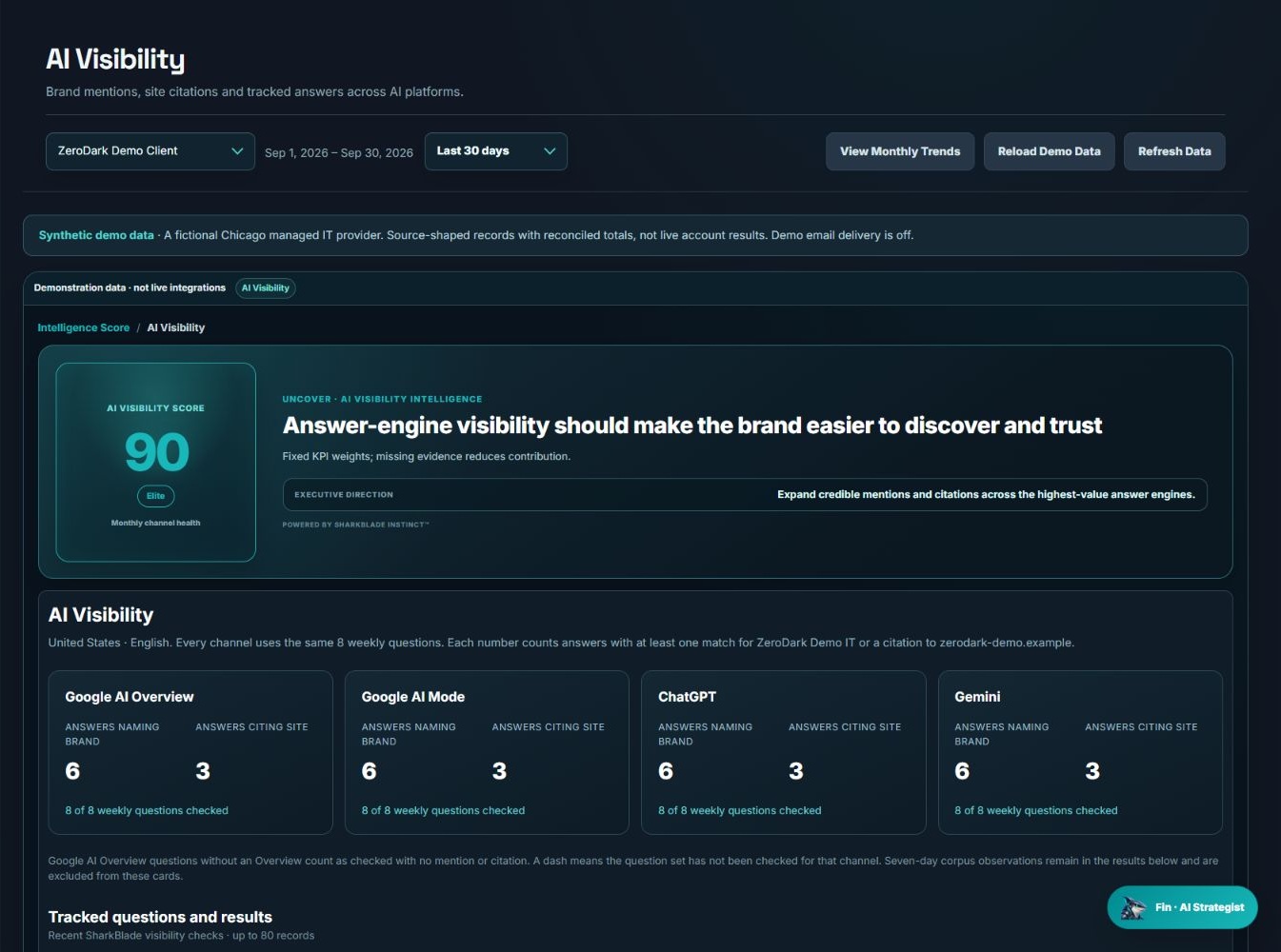
The actual demo shows ChatGPT, Gemini, Google AI Mode and Google AI Overview with eight checked questions per channel. It displays separate brand-naming and own-site-citation counts. In the synthetic example, six mentions and three citations out of eight are different raw observations from the category score of 90. This demonstrates the interface and example counting scope. It does not establish that every prospect’s question set, collection conditions or competitive environment will be identical. Confirm the supported scope during evaluation.
Test a useful buyer question
Choose a question that a suitable customer might ask without naming your business. Inspect the generated answer and cited sources. Then ask what the tool helps you verify: factual description, relevant source coverage, a missing explanation or an observation that needs repeating. Avoid evaluating a product solely on a branded question that already names the company. Also avoid assuming one absence establishes an implementation fault. Answer systems and observation conditions can vary.
Keep referral measurement separate
An AI answer citation and a website visit are related but different events. A visibility product may show the first; analytics may show some referral activity. Neither automatically attributes a qualified inquiry to a particular observed answer.
Choose for your operating need
An internal team may want evidence for content decisions. An agency may need consistent client-review scope and multiple workspaces. A business owner may value interpretation alongside reporting. Compare those requirements and the actual proposal terms instead of purchasing an unsupported promise of guaranteed AI placement. The measurement guide explains how to read the observations. The audit guide distinguishes readiness checks from sampled answer presence. Both should be understood before treating any vendor’s score as a universal market ranking.