Give every pillar a job in the buying process
A social pillar is a repeatable subject area with a defined audience purpose. “Company news” is a label; “help operations leaders evaluate a provider’s implementation approach” describes a useful job. Start with the decisions prospective buyers need to make. For a hypothetical technical service business, useful pillars might explain fit, show how work is evaluated, answer procurement concerns and describe practical next steps. A pillar should generate genuinely different explanations rather than repeated promotional copy.
A worked four-week plan
| Week | Buyer question | Content format | Appropriate destination |
|---|---|---|---|
| 1 | Is this service suitable for our problem? | A plain-language use-case explanation | The relevant service page |
| 2 | How would we evaluate the work? | A checklist with acceptance criteria | A practical guide |
| 3 | What does the reporting show? | An annotated demonstration | A report-example article |
| 4 | What happens after an enquiry? | A process explanation | The contact or booking path |
This is an illustrative plan, not a required posting frequency. A team can use several posts to explain one complex question or fewer posts when it cannot add useful detail. Avoid a calendar that fills every slot without a reader purpose.
Connect the plan with measurement
For an explanation post, review whether the intended audience interacted or visited the linked resource. For an enquiry post, verify that the destination works and supported source information reaches the receiving record. Keep those measures separate from the volume of published posts.
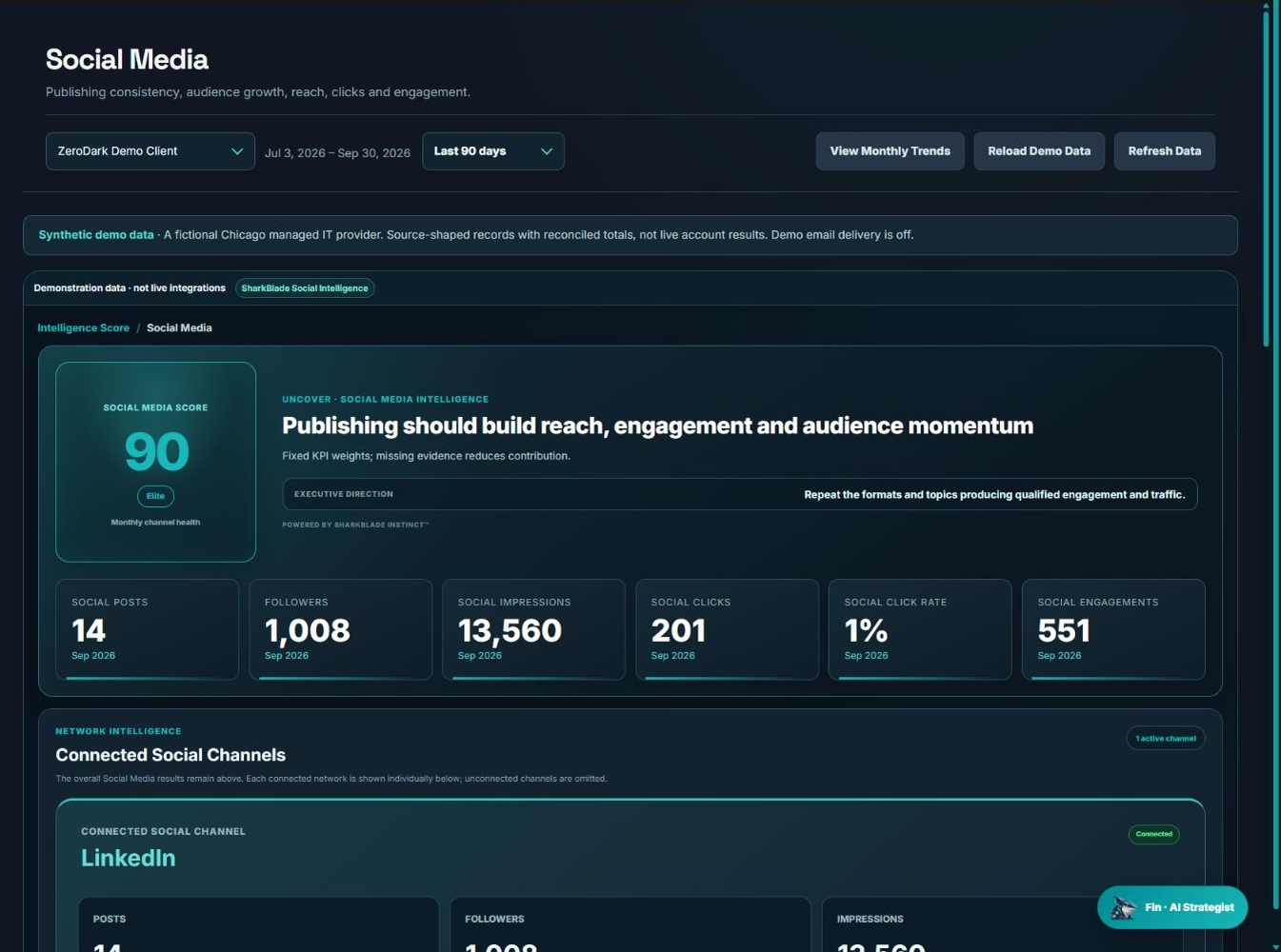
The demo shows how publishing and response measures can be reviewed together. It does not identify the winning topic or prove a customer result. Add the topic, format and intended audience to your own editorial record so the numbers can be interpreted.
Use expertise without inventing endorsements
Turn a real service explanation into several useful formats: a concise problem description, a step-by-step diagram, a procurement question and a worked example. Obtain permission before using identifiable client material. Label fictional examples and synthetic platform data accurately. Do not create a testimonial because the plan calls for “social proof.” If an approved outcome is unavailable, demonstrate how the process works or show what evidence a buyer should request. Those formats can be useful without claiming a result that has not occurred.
Review the pillar, not just the calendar
At the monthly review, compare similar objectives and formats over an appropriate period. Ask whether the business received more relevant attention and whether the linked page satisfied the question. Keep a record of major distribution or audience changes. Stop repeating a theme when the team cannot explain its purpose or contribution. Expand it when buyer questions and response evidence suggest a useful next installment. The broader B2B content strategy guide shows how the same questions connect to search articles and service pages; the platform-selection guide addresses which social channels deserve the effort.