Define the evidence boundary
A public-evidence audit can review accessible pages, visible navigation, service explanations, search research and inquiry entry points. It cannot establish private advertising efficiency, authenticated social engagement, collected lead totals or sales outcomes without the appropriate additional sources. Use the checklist to record observations rather than to manufacture a complete score from unavailable data. For each item, mark checked, issue observed or not established, then save the URL and the evidence needed to explain the finding.
A reusable public-evidence checklist
Record the finding in a useful format
| Field | Example entry |
|---|---|
| Page or topic | The public service page being reviewed |
| Observation | A service is mentioned but its fit and process are unclear |
| Evidence | The accessible page and the reviewed date |
| Interpretation | A suitable buyer may struggle to evaluate the offer |
| Proposed check | Confirm service facts with the business before rewriting |
| Limit | No private conversion or customer research evidence reviewed |
This is an illustrative record, not a claim about a specific live prospect. A public form can be reviewed for clarity without submitting an unauthorized test or pretending its delivery has been confirmed.
Understand the AI discovery layer
Review accessible factual explanations and supporting evidence as readiness considerations. If the audit includes actual answer observations, document the question, platform and date separately. Readiness is not proof of a mention or citation. ZeroDark’s existing audit offer and report remain unchanged. This checklist explains a public-evidence review; it does not add a new promise that the free audit measures every advertising, social or AI platform.
Interpret the sample report honestly
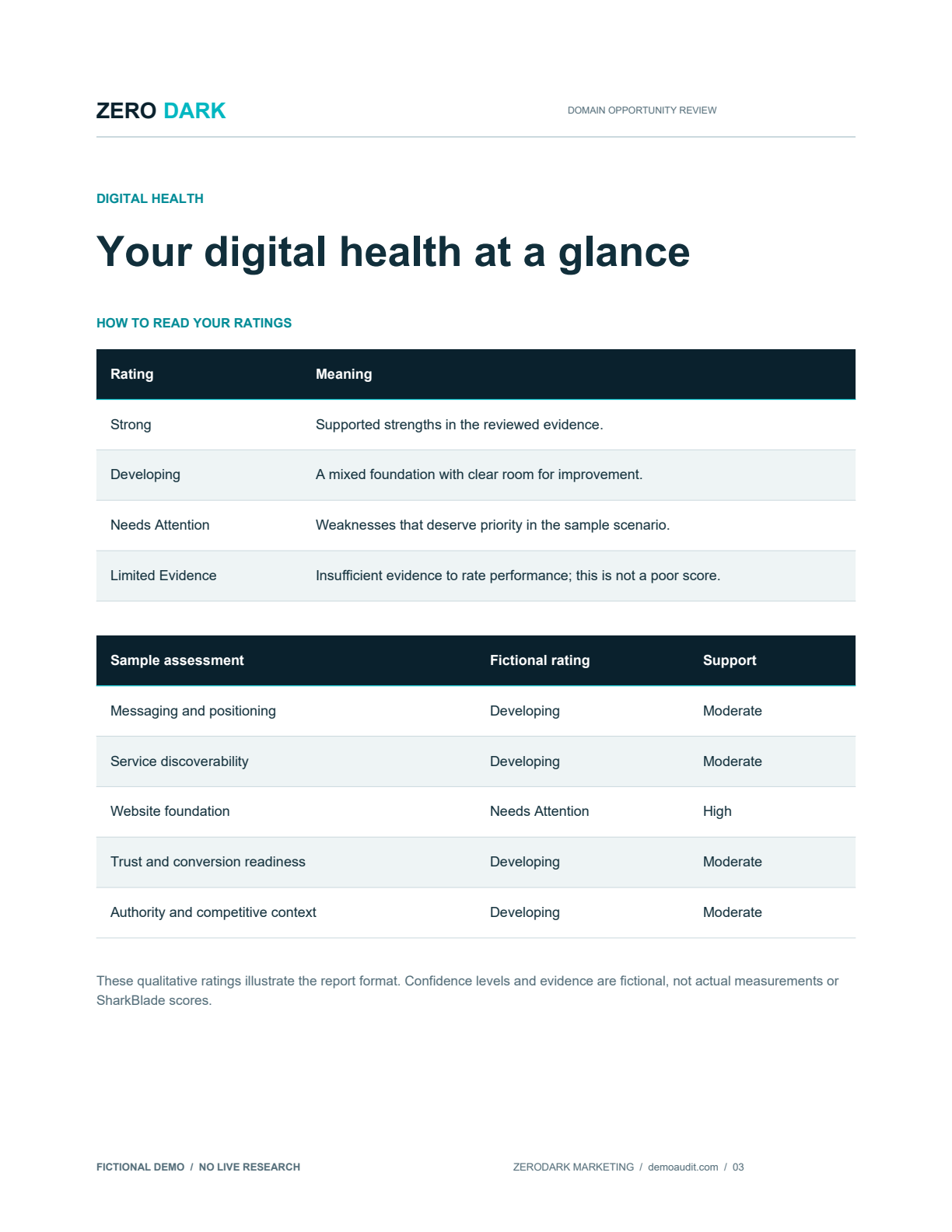
The sample is clearly labeled fictional and synthetic. Its rating explanations illustrate how findings and evidence limits can be communicated. They are not measurements of an actual domain’s current performance.
Convert the review into priorities
Choose the issues that materially affect intended discovery and the buyer’s next step. Reproduce suspected technical problems before assigning repairs. Validate keyword relevance before producing new pages. Identify which questions require connected sources and ongoing reporting. The annotated sample article walks through the existing report. The technical acceptance guide covers the deployment checks needed when the resulting website work is implemented. Keep those tasks distinct so an initial public review is neither undersold nor presented as evidence it does not contain.