A report should explain the period and the decision
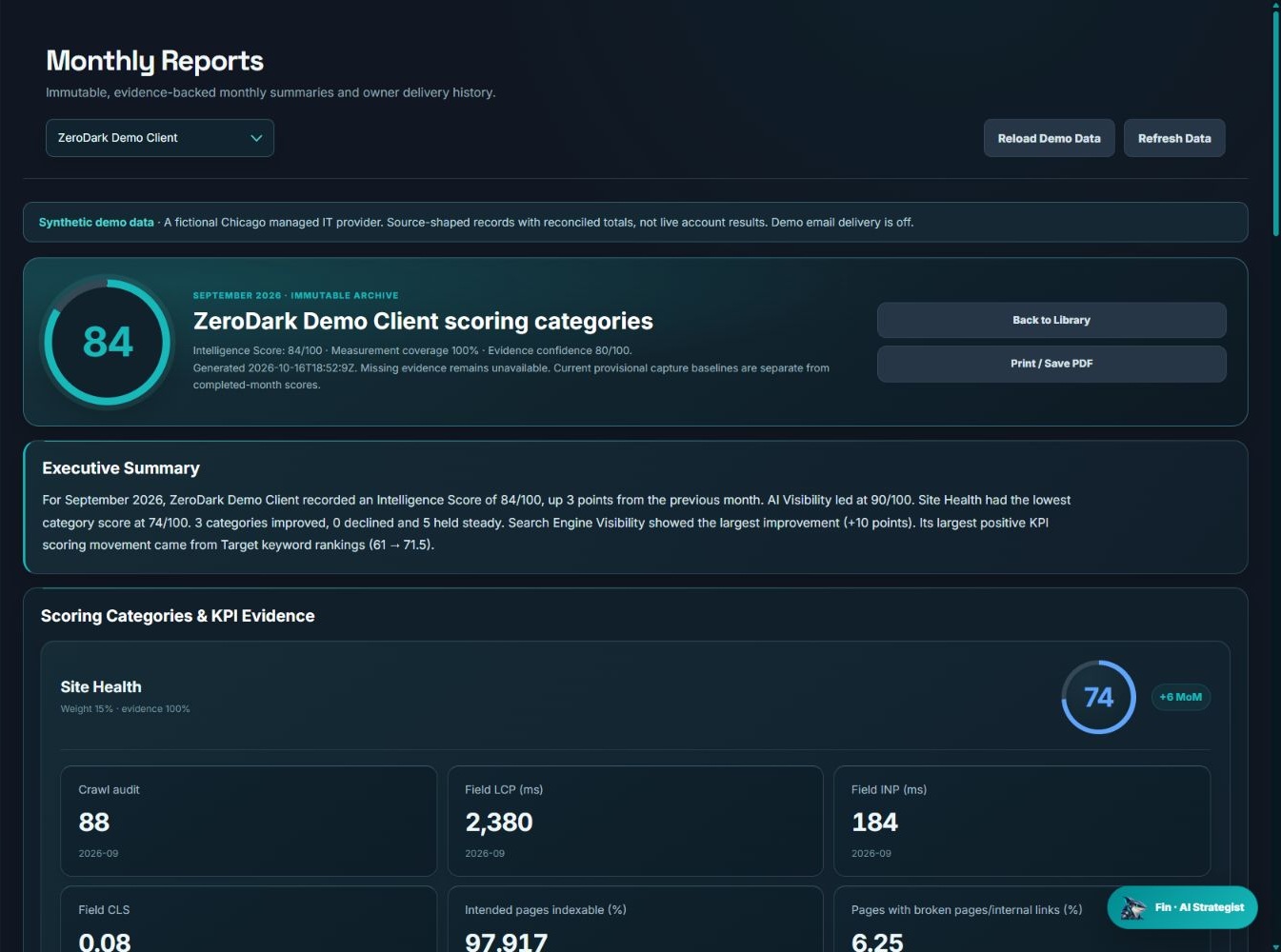
A monthly marketing report is most useful when a reader can identify the reporting scope, the material changes and the actions that need attention. Separate a saved record of the period from current provisional activity. A report should not silently change its historical meaning when a live dashboard updates. SharkBlade’s actual monthly report interface describes an immutable archive and includes a dated summary with category and KPI evidence. The example below is from ZeroDark Demo Client and uses synthetic data.
Annotate the example
The report shows an Intelligence Score of 84/100, measurement coverage of 100% and evidence confidence of 80/100. These fields have different meanings. Coverage does not mean every possible business outcome is measured, and confidence should not be presented as a statistical probability that a recommendation will succeed. The executive summary identifies Site Health at 74 and Search Engine Visibility as the category with the largest displayed improvement. The useful next step is to inspect the underlying KPI evidence and comparison basis. The synthetic movement does not prove that a specific delivery action caused a real-world improvement.
A reusable monthly report outline
| Section | Include | Avoid |
|---|---|---|
| Scope | Business, month, sources and comparison period | Mixing rolling and calendar windows |
| Executive summary | Material observations and open decisions | Unsupported success language |
| Category review | Assessment, underlying KPI and evidence limit | Quoting only the strongest metric |
| Actions completed | Deliverable and acceptance evidence | Treating completion as proof of revenue |
| Next priorities | Owner, bounded task and review measure | A long unassigned wish list |
| Changes to interpretation | Target, definition or source changes | Comparing incompatible periods silently |
Example narrative to adapt
For a fictional business: “The selected month shows stronger overall assessment, while technical findings remain a priority for the enquiry journey. We will verify the affected pages and agree a bounded repair. The next review will distinguish delivery completion from subsequent performance movement.” This is an illustrative narrative, not a quotation from a strategist or evidence of a customer outcome. Replace it with the actual observations, qualifications and responsibilities for the business being reviewed.
Use a written action register beside the report
Record the issue, supporting evidence, owner, agreed work, expected completion date and acceptance test. If a form repair is the priority, acceptance may be a verified successful test record. Business impact requires subsequent comparable observations and may have other explanations. Do not imply that every working task register is a native SharkBlade feature. A team can maintain its operating assignments in the appropriate tool while using SharkBlade for the marketing evidence and recurring report.
Bring the report into a focused conversation
The monthly review guide supplies an example meeting agenda. The weekly-highlights guide explains why short updates and a detailed monthly record serve different purposes. Keep both tied to the same definitions so the business can understand what changed and why it matters.