Different totals can describe different things
An advertising platform can count conversion actions, an analytics report can count sessions with events, and an intake system can contain contact records. The same person may submit a form and later book a meeting. A company-level signal may describe activity without identifying a person at all. A discrepancy is worth investigating, but forcing every total to match can destroy useful meaning. Begin by documenting what each source counts and the time window attached to it.
Use the demo as a reconciliation exercise
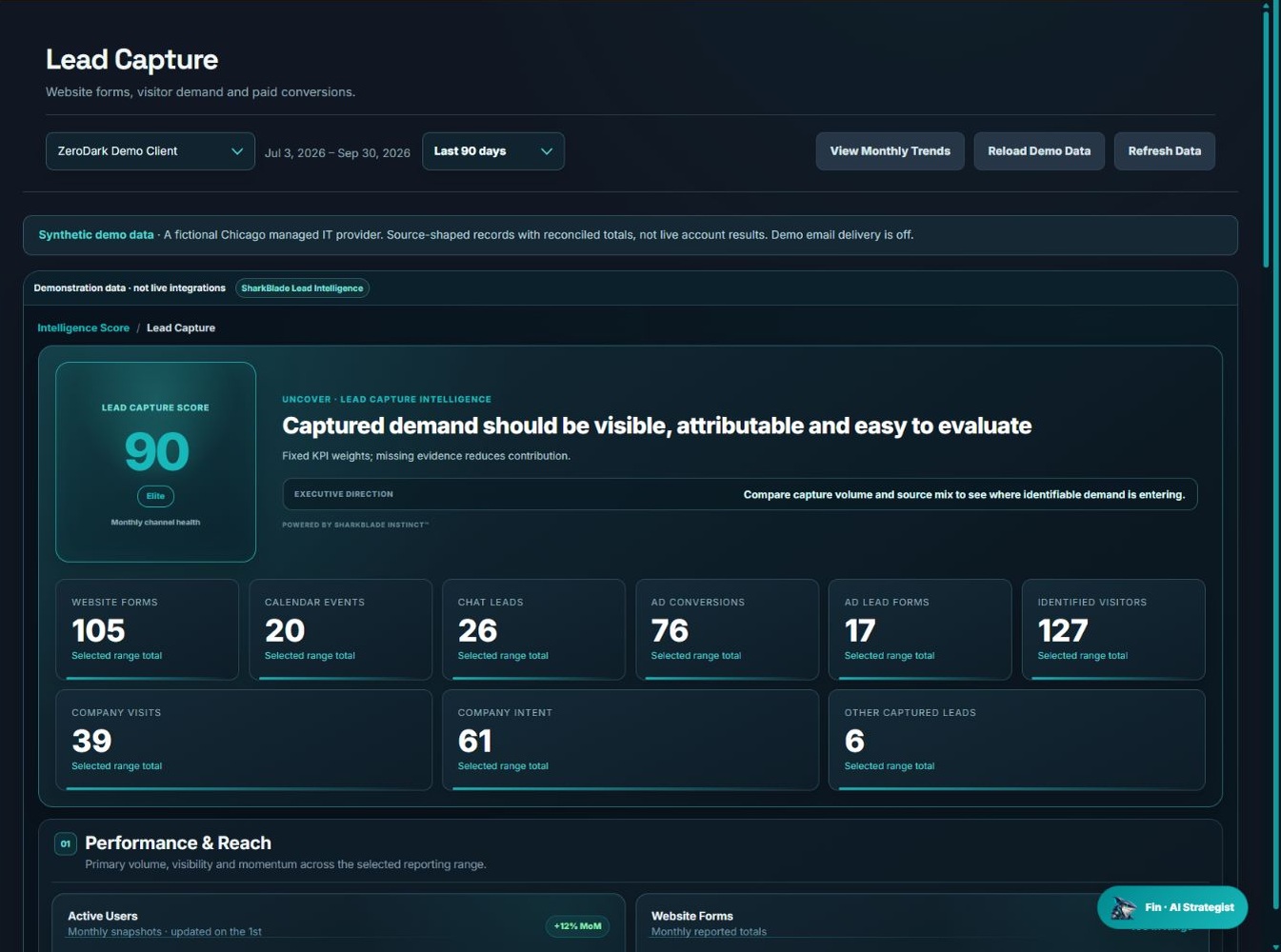
The demo selected-range cards show 76 ad conversions and 17 ad lead-form records. They are not required to match: reported conversion actions and a particular contact-intake source have different definitions. Forms, bookings, chat, visitor identities and company signals add further distinctions. These are synthetic observations. They do not show whether a real integration lost a record, and the adjacent source totals should not be summed into a claimed count of unique prospective customers.
Build a reconciliation worksheet
| Check | Question to resolve |
|---|---|
| Unit | Action, session, person, company, booking or opportunity? |
| Identity | Which stable source ID or supported identity rule is used? |
| Event | First inquiry, repeat submission, scheduled meeting or another action? |
| Time | Event date, attribution date, capture time and time zone? |
| Attribution | Which campaign or source receives credit and under what rule? |
| Collection | Complete source, delayed import, failed request or test traffic? |
| Deduplication | How are repeated activities and cross-source identities handled? |
Follow a hypothetical person through the process
Alex submits a form on Monday and books a meeting on Tuesday. A form system can correctly show one submission, the calendar one booking and a contact system one unique person. A conversion platform may count a different configured action. None of those observations alone establishes a qualified sales opportunity. If the form-success message appeared but no intended record arrived, that is a different issue. Inspect delivery logs or supported intake evidence, field mapping and retry behavior within the authorized implementation process. Do not use a count difference alone as proof of a delivery failure.
Separate repairs from redefinitions
After correcting a collection problem, note the change date and any backfilled records. A larger subsequent count may reflect restored visibility rather than increased demand. After changing an identity or qualification rule, preserve the old basis for historical interpretation. Use SharkBlade’s category and table views to inspect supported source distinctions. Keep downstream qualification and revenue claims tied to their own verified records. The report becomes more trustworthy when it explains why numbers differ and which differences require action, rather than presenting a falsely tidy total. For advertising-only discrepancies, use the conversion-versus-lead guide. For the complete source inventory, use the nine-category capture walkthrough.
Explore the next step
Supporting documentation
Google Ads: conversion measurement ↗Google Analytics: session definitions ↗