Read capture as several types of evidence
Lead capture is the process of preserving useful information when interest reaches the business. In SharkBlade, the source cards distinguish identifiable inquiries, visitor evidence, company signals and advertising conversion totals. They are not nine interchangeable versions of a sales-qualified lead. The demo screenshot uses a selected 90-day range and synthetic data. Start with that scope before reading any total. The monthly intelligence assessment and a selected-range activity count can refer to different time windows.
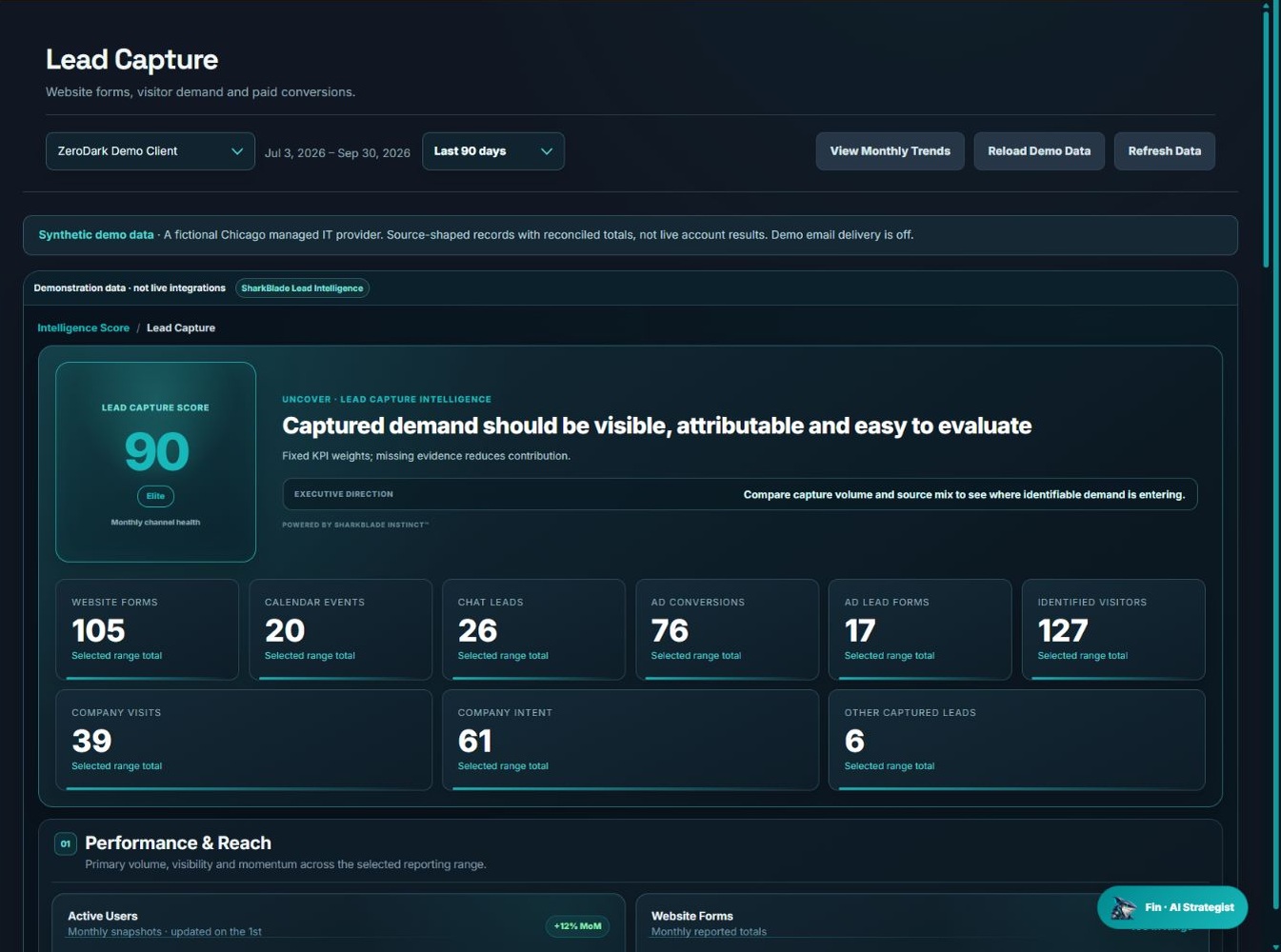
The nine categories
| Category | Demo selected-range total | What to inspect |
|---|---|---|
| Website Forms | 105 | Submission and supplied source details |
| Calendar Events | 20 | Booking context and available identity |
| Chat Leads | 26 | Identifiable captured inquiry, not every chat interaction |
| Ad Conversions | 76 | Reported conversion actions and attribution scope |
| Ad Lead Forms | 17 | Supported ad-platform contact intake |
| Identified Visitors | 127 | Supplied visitor identities and visit context |
| Company Visits | 39 | Company-level visit evidence rather than a named person |
| Company Intent | 61 | A company signal requiring evaluation |
| Other Captured Leads | 6 | Source classification and record quality |
These values demonstrate the interface. Do not add the column into a single new-customer total: the categories contain different units and may describe related activity.
Follow one inquiry through the table
Choose a supported website-form record and inspect the supplied identity, capture time, source and event context. Then confirm the receiving team knows the intended next step. A delivered record is useful only if its context is interpretable and someone owns the response.
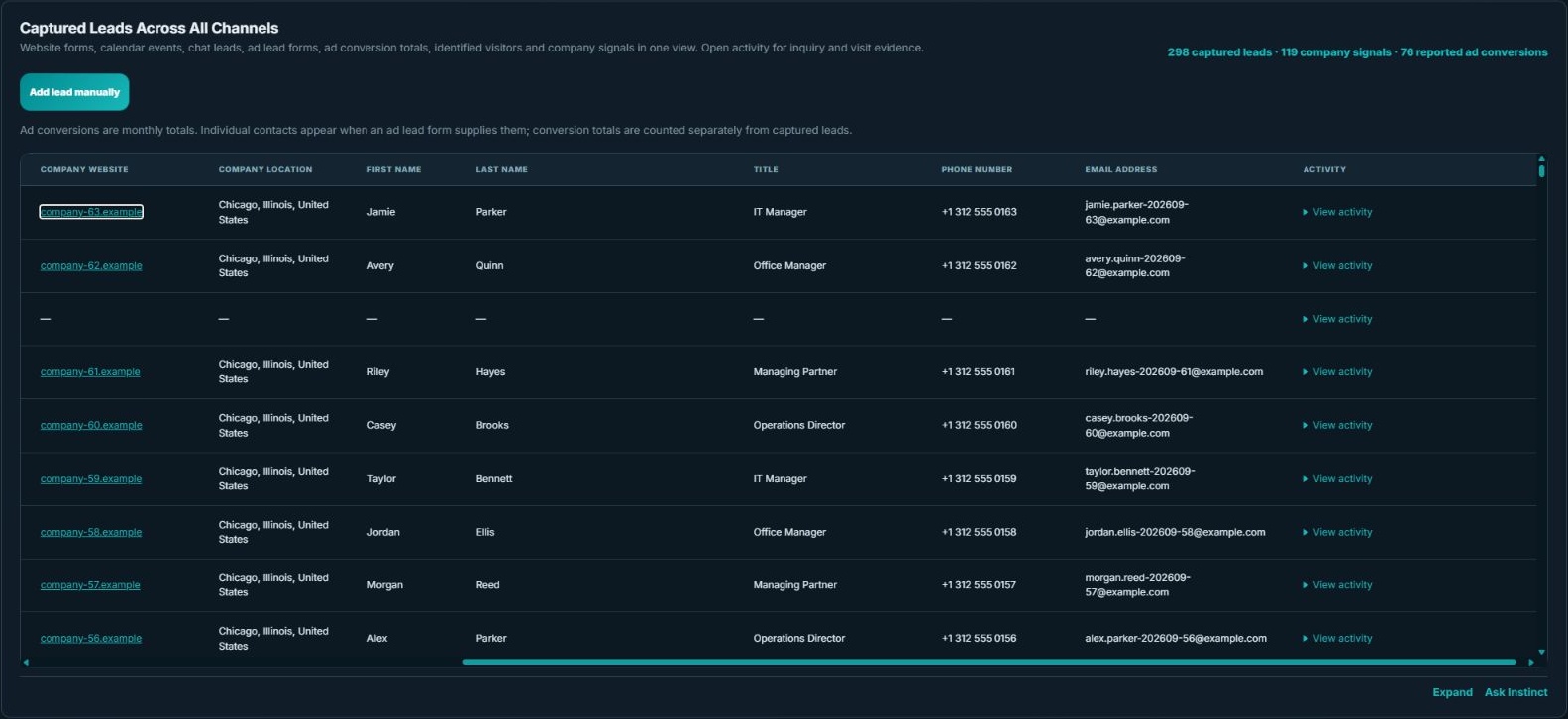
Where the source does not provide an identity or a campaign field, preserve that limitation. Inventing a person from a company visit or assigning a source without evidence would make the report look more complete while reducing its reliability.
Improve the underlying journey
A forms issue may require clearer field labels, a delivery check or a more appropriate offer. A booking issue may concern availability or confirmation. Weak company-signal quality may require a narrower review criterion. The intervention should follow the evidence type rather than a blanket request to “generate more leads.”
Review progress without losing definitions
Track unique new inbound leads, identified visitors and new ICP intent companies according to the supported field definitions and configured targets. Keep them distinct from aggregate ad conversions and downstream opportunities. After making a change, verify collection and then compare a suitable period. The landing-page examples show how forms and booking paths can fit a buyer journey. The reconciliation guide explains why different systems can legitimately report different totals and when the difference signals a collection problem.