Identification and inquiry are different events
An identified visitor is a person record supplied by a supported identification source. That is not the same as every person who visited the website, and it is not proof that the person asked to be contacted. An inbound form or booking represents a different type of activity. This distinction matters when a business reviews demand. A report can show many identified visitors while recording fewer inquiries. The difference may be expected because the measures describe different behavior, not because the capture system lost those visitors.
Read the demo categories separately
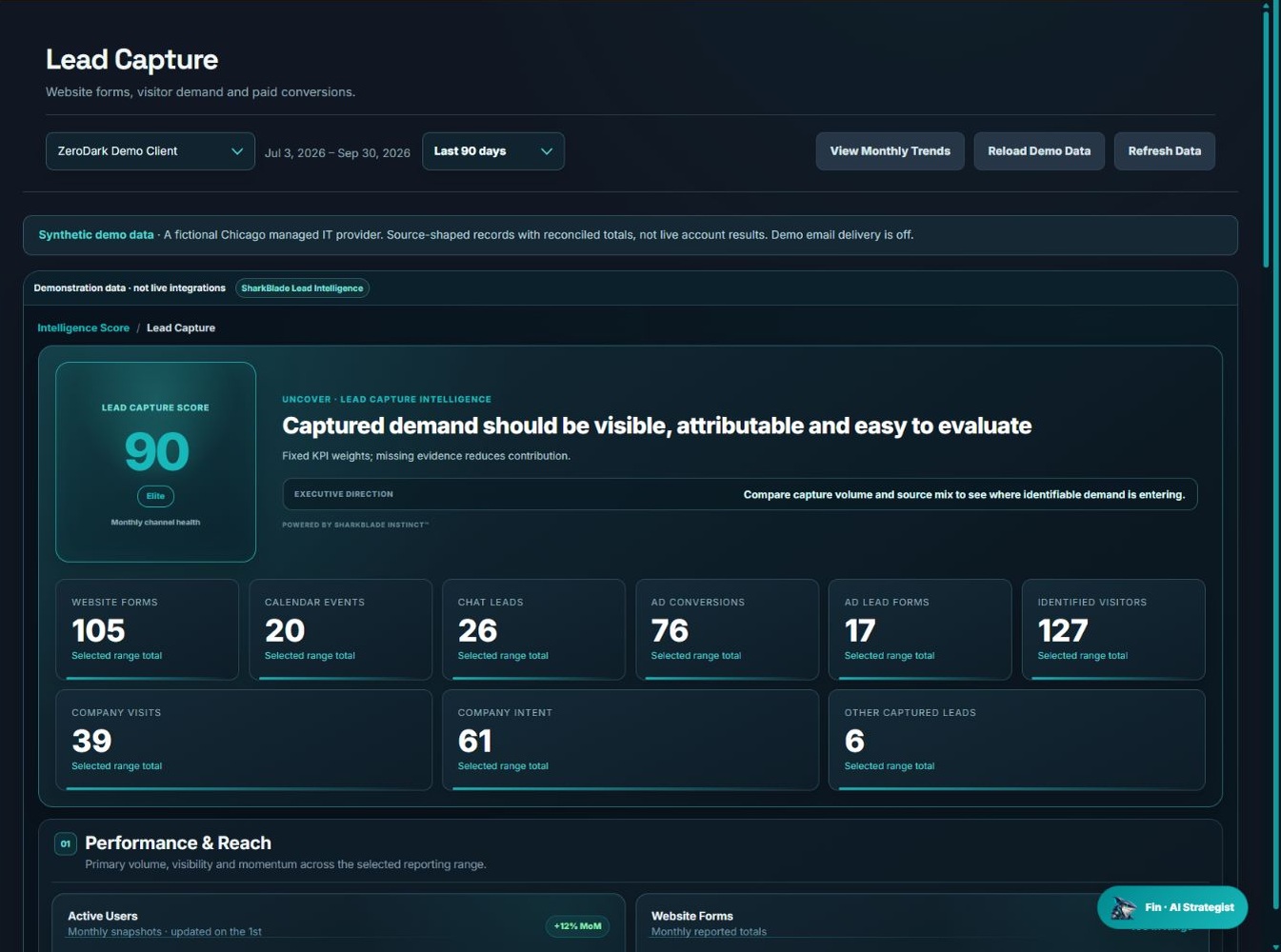
The selected-range demo shows 127 identified visitors, 39 company visits and 61 company-intent records. All are synthetic. Their presence in adjacent cards does not establish that the same people or companies appear in every group, or that any of them became opportunities.
| Evidence type | What it can support | What it does not establish alone |
|---|---|---|
| Website session | Activity collected by analytics | A known person’s identity |
| Identified visitor | Identity supplied by a supported source | An explicit sales inquiry |
| Company visit | Company-level visit context | The identity of the person browsing |
| Company intent | A supplied company signal | Purchase timing or a committed buyer |
| Inbound inquiry | A captured request or conversation | Sales qualification or revenue |
Inspect scope and provenance
Before acting on an identification result, review the source, observation time, available visit context and applicable handling requirements. Do not fill missing identity fields by guessing. The fact that a source can supply a business contact does not eliminate the need for appropriate outreach decisions. Keep the identification source separate from analytics session collection. Their populations, definitions and collection conditions differ. The denominator for “share of visitors identified” cannot be assumed from unrelated selected-range totals.
Use a sensible operational handoff
For a hypothetical specialist supplier, a company-level visit to several capability pages may justify a closer account review. It does not justify labeling the account as an active opportunity. A named person submitting an RFQ supplies stronger and different evidence about an immediate need. Write a handling rule for each evidence type. An inbound inquiry may require a prompt response. A company signal may require verification against the business’s agreed fit criteria. Maintain that distinction in the team’s working records.
Measure collection and usefulness separately
Review whether supported records arrived consistently and whether the supplied context helps an authorized business process. Do not describe an increase in identified visitors as an increase in customers. If the source, identity rule or scope changes, document that before interpreting month-to-month movement. SharkBlade’s separate capture categories help preserve these boundaries. The nine-source guide explains the full view, while the KPI reference shows why source definitions must remain visible when business targets are discussed.