Match the discipline to the question
The terms marketing intelligence, business intelligence and market research overlap in everyday use. A company may use all three. The practical buying question is which decision needs support and whether the proposed evidence can answer it. For this guide, marketing intelligence connects marketing observations to decisions; business intelligence describes a broader organizational data-analysis function; market research investigates a market, customer or competitive question through an appropriate research method. These are working distinctions, not a claim that vendors use identical labels.
A decision-oriented comparison
| Discipline | Example business question | Possible evidence | Typical deliverable |
|---|---|---|---|
| Marketing intelligence | Which marketing issue deserves work this month? | Search, website, channel and inquiry observations | Priorities and a comparable performance review |
| Business intelligence | How do operations, sales and finance relate? | Organizational systems and governed datasets | Cross-functional analysis or reporting |
| Market research | What do buyers need and how do they evaluate options? | Interviews, surveys or structured secondary research | Research findings and their methodological limits |
The quality of each depends on its implementation. A report called market research may be little more than a desk summary. A dashboard called intelligence may include substantial analysis. Ask for the method and evidence, not just the category name.
Work through a hypothetical supplier’s decisions
A manufacturer wants more suitable RFQs. Its marketing review can inspect whether relevant capability pages receive visits and whether RFQ forms deliver usable inquiries. That is a marketing-intelligence task. If the business wants to connect production capacity, order margins and revenue forecasting, it needs appropriate operational and financial evidence. If it wants to learn why procurement teams reject a new material, interviews or another suitable research method may be more relevant than website traffic. One set of marketing category scores cannot establish all three answers. The hypothetical example illustrates why the decision determines the evidence required.
Where SharkBlade fits
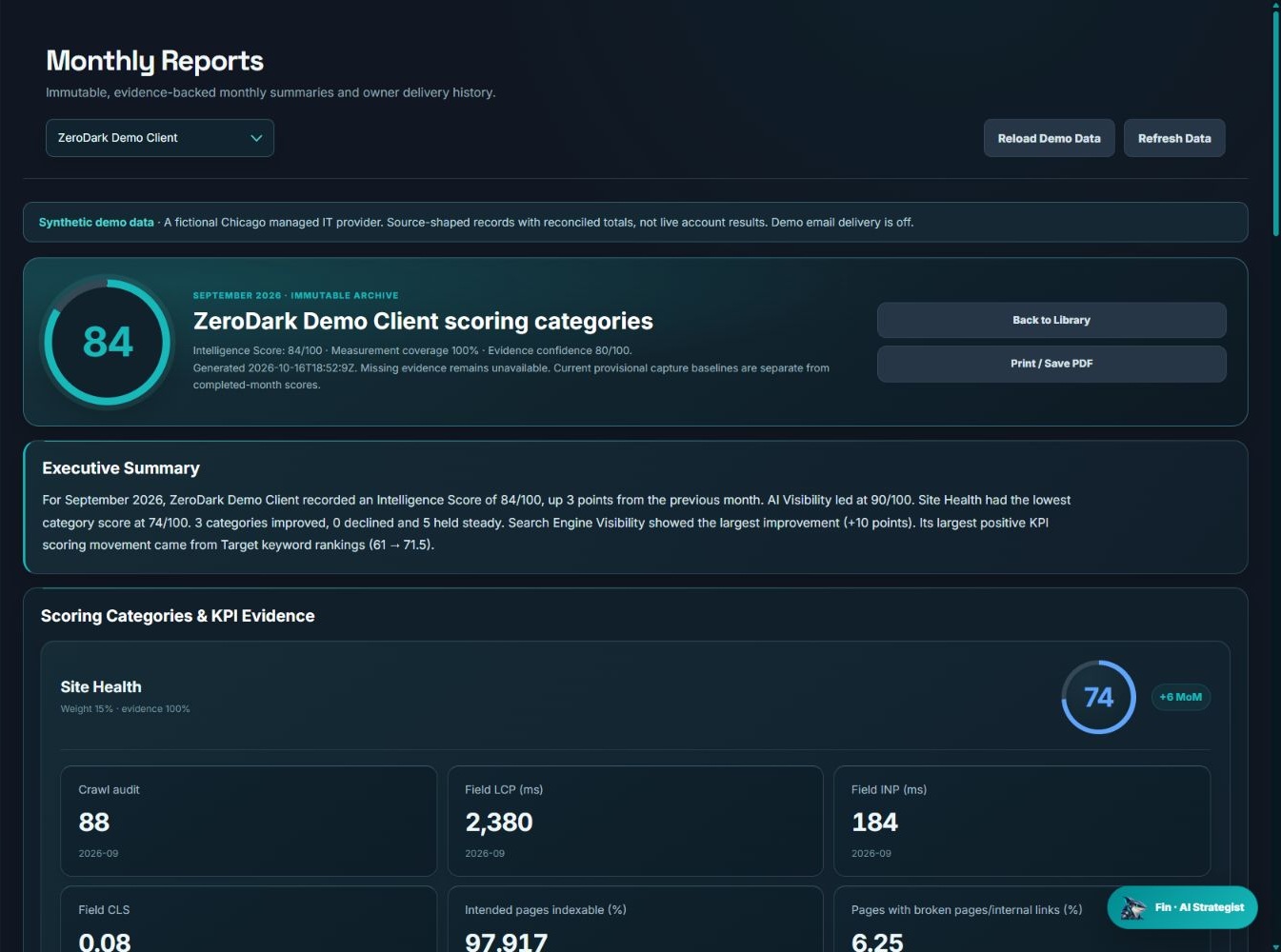
SharkBlade is a marketing intelligence and reporting platform. Its actual demo shows category assessments, underlying marketing KPIs and a dated monthly summary. It should not be represented as a general-purpose enterprise BI warehouse or a substitute for conducting primary customer research. Fin can help interpret supported workspace evidence and explore priorities. External research and downstream business conclusions still need the appropriate sources. The synthetic demonstration does not establish market size, customer preferences or a client’s financial results.
Questions to ask before commissioning work
- Which decision will this work help us make?
- What information will be collected, and what will remain unavailable?
- Is the output a recurring report, an investigation, a research study or execution?
- How will assumptions, uncertainty and source definitions be documented?
- What additional access or specialist knowledge is needed?
A provider who can answer those questions gives the buyer a clearer basis for evaluating fit. If the primary need is ongoing marketing prioritization, review the marketing-intelligence examples and the reporting-software checklist before choosing the level of support.