What makes an example useful?
A useful intelligence example includes an observation, a plausible investigation, a proposed action and the evidence to revisit. It also states what the information does not prove. Otherwise, a dashboard number can become an unsupported success claim. The examples below use authentic SharkBlade screens with synthetic data. The action choices are illustrative. They are not records of work performed for a real client or claims that the proposed intervention caused a result.
Example 1: a strong overall score with a weaker technical area
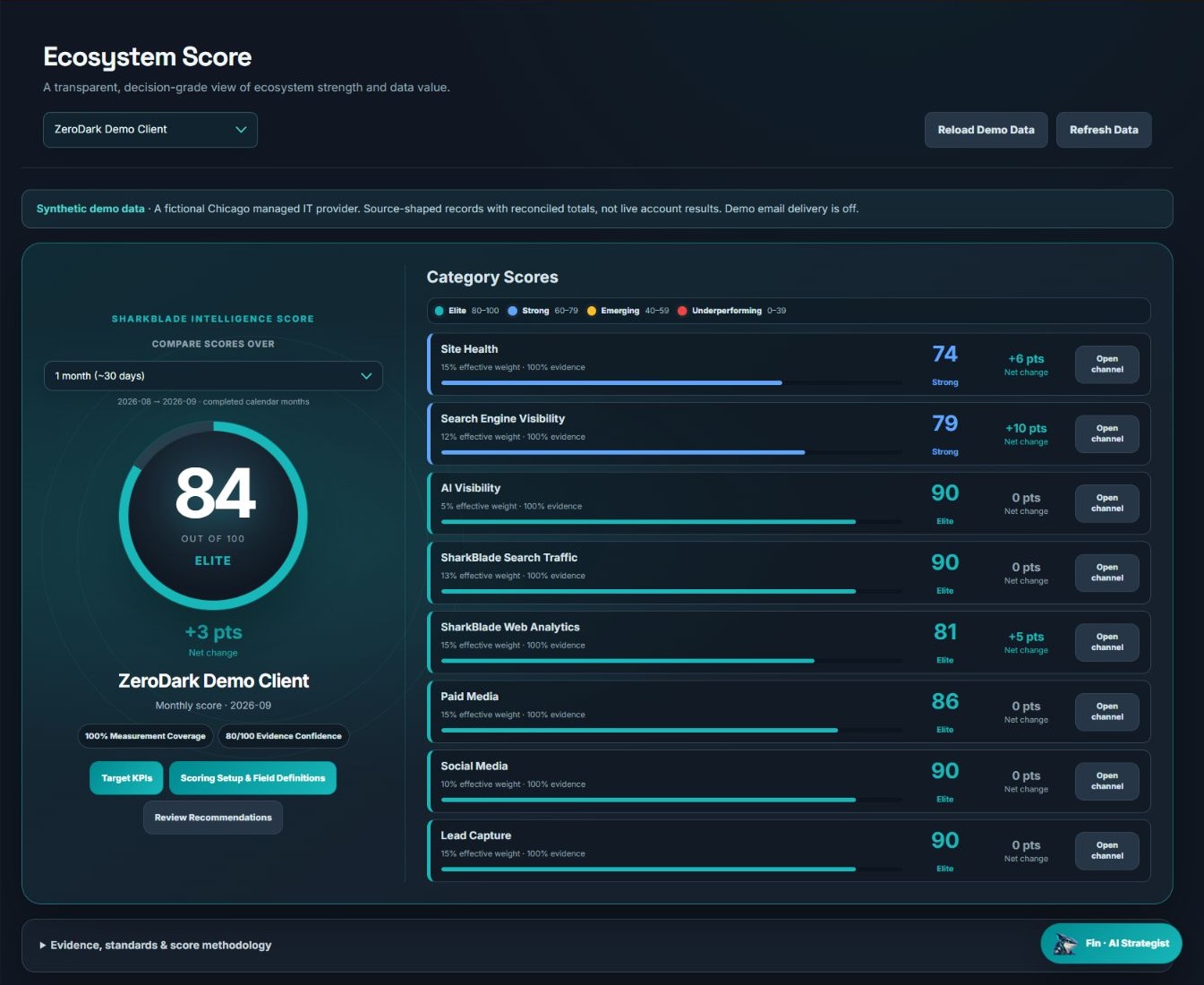
Observation: the overall assessment is 84, while Site Health is 74. Investigation: open the underlying technical evidence and identify whether the findings affect a page important to the enquiry journey. Proposed action: assign a specific repair and a repeatable acceptance check. Evidence to revisit: the affected URLs, collection scope and underlying technical measures after delivery. Do not describe a score increase as additional revenue. A target change or new evidence could also alter the assessment.
Example 2: social response without a demonstrated inquiry outcome
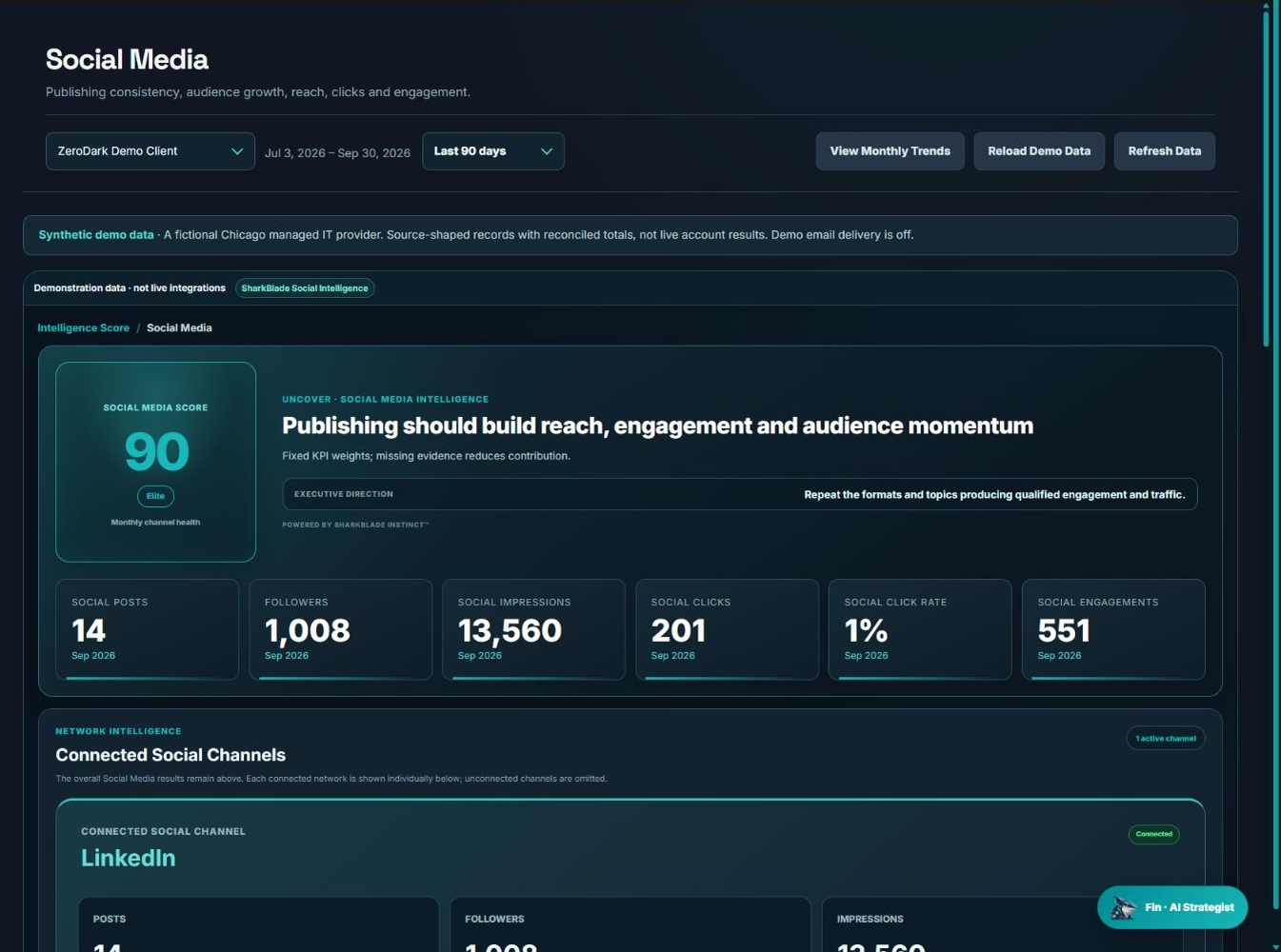
Observation: the September demo cards show 14 posts, 13,560 impressions, 201 clicks and 551 engagements. Investigation: identify the topics and destination pages behind the activity. Proposed action: test a clearer explanation and appropriate next-step link for a relevant buyer question. Evidence to revisit: comparable content response, relevant destination activity and supported inquiry-source evidence. The counts alone do not establish that the audience was qualified or that clicks became customers. The reporting period on each card must remain clear.
Example 3: lead totals that should not be forced to match
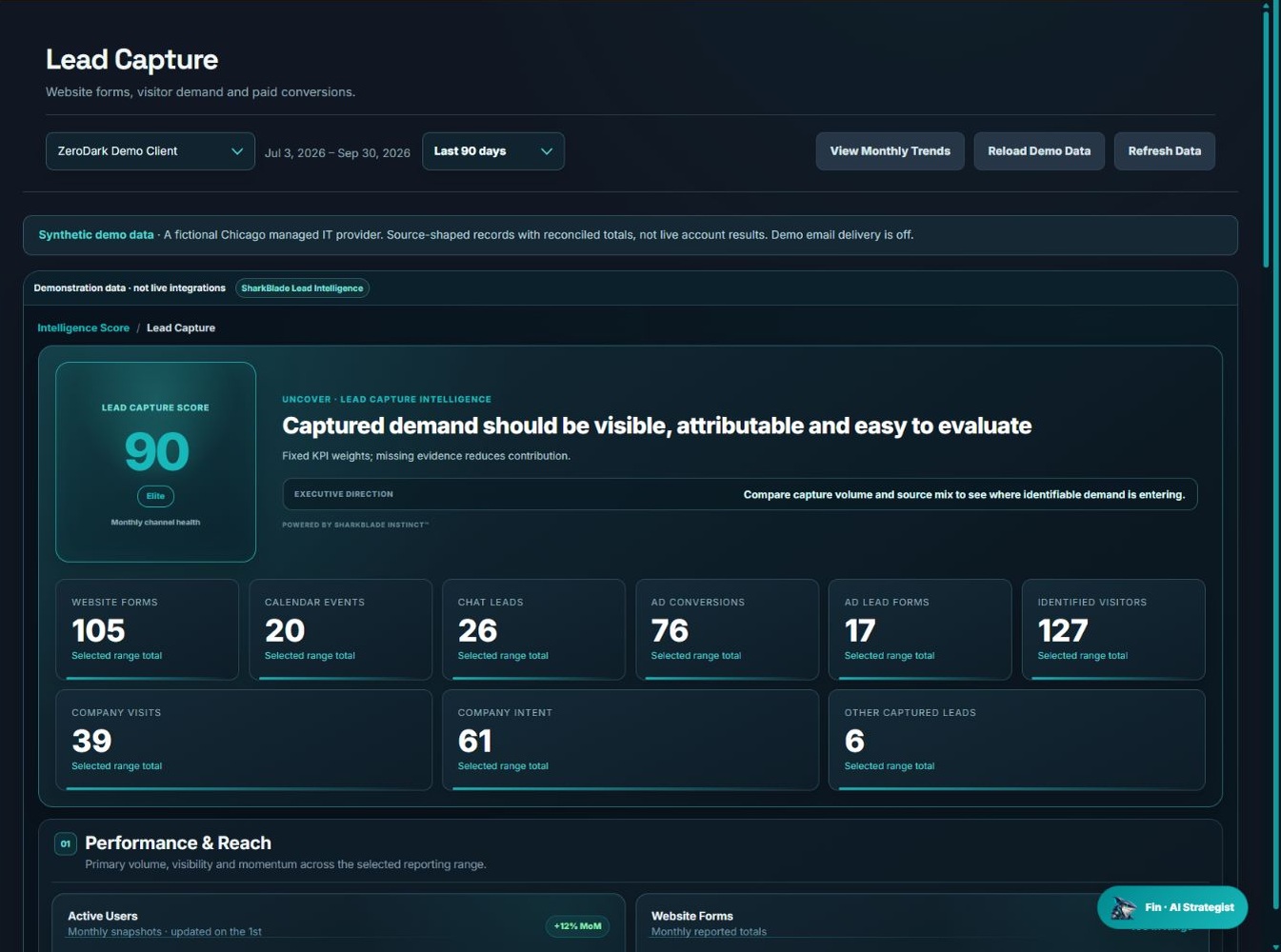
Observation: the selected-range cards show 76 ad conversions and 17 ad lead-form records. Investigation: document the conversion actions, contact-intake source and reporting window. Proposed action: inspect an authorized test record and the intended delivery path if there is evidence of a collection problem. Evidence to revisit: the specific action definition and received record, not an invented total made by adding people, visits and company signals together. Reported conversions and identifiable contact records answer different questions.
A reusable decision record
| Field | What to write |
|---|---|
| Observation | The exact measure or finding, source and period |
| Business relevance | Why this affects a priority buyer journey |
| Alternative explanations | Tracking, scope, seasonality, configuration or real performance |
| Next action | A bounded task with an owner |
| Acceptance evidence | What confirms the task was delivered |
| Subsequent review | Which comparable measure will be revisited |
Use one record per meaningful decision. The purpose is to make the transition from report to action inspectable. If an explanation cannot identify its supporting observation, ask for clarification before commissioning work. For an ongoing review, the monthly report and performance-meeting guides provide the written format and discussion process. The score walkthrough explains why raw measures and category assessments must be read separately.